Senate map shifts as Democrats take 7 seats; Cooper wins NC
North Carolina voters elected Roy Cooper to the U.S. Senate as Democrats claimed a 54-44 majority in Washington, marking a significant shift in the national balance of power.
By Natalie Cooper ·
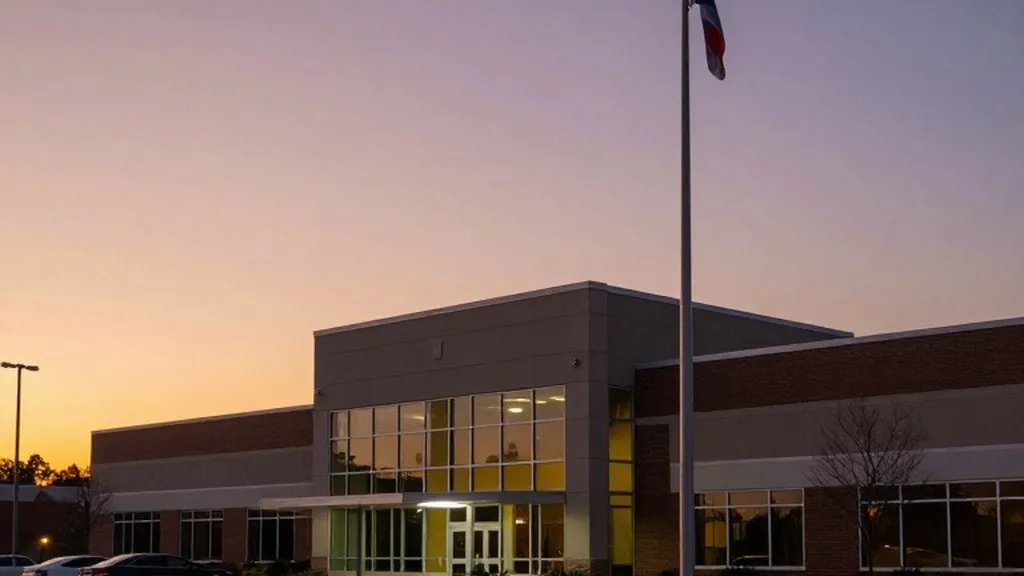
Polls across Mecklenburg County closed at 7:30 p.m. on Tuesday, November 3, 2026, concluding a general election that included contests for the U.S. Senate, U.S. House, state legislature, and local offices. Voters in Charlotte, Concord, Gastonia, Huntersville, Kannapolis, and Indian Trail participated in a statewide ballot that featured an open U.S. Senate seat with no incumbent running. The Democratic, Green, Libertarian, and Republican parties were all listed on the ballot for the federal race. This election also included state supreme court and intermediate appellate court positions, school board races, and municipal government elections across the county.
The result in North Carolina marked a decisive victory for the Democratic Party in the state's only Senate seat. Roy Cooper, the Democratic nominee, secured the seat after a competitive general election. The victory was a central part of a broader national trend where Democrats expanded their control over the U.S. Senate. By winning the open seat in North Carolina, Democrats contributed to a net gain of at least seven Senate seats, all of which were previously held by Republicans. This shift placed Democrats in a commanding 54-44 majority in the 119th Congress, reversing the previous balance of power.
The national Senate map saw significant changes in states that had not flipped party control in decades. Democrats flipped Republican-held seats in Texas, Kansas, and South Carolina, a movement that was described as a sweep beyond the initially competitive battlegrounds. The party also secured victories in other key states, helping to cement a new majority. This wave of support allowed Democrats to take control of the chamber, a development that has already triggered intense internal debates about leadership and policy direction for the new Congress.
Within the Democratic caucus, the victory has set up a seismic confrontation over who will lead the party in the Senate. Sen. Bernie Sanders of Vermont announced that he would not be supporting Sen. Chuck Schumer for re-election as the Democratic majority leader. Sanders, an independent who caucuses with Democrats, joined Sen. Elissa Slotkin of Michigan at a news conference to call for a new generation of leadership. Slotkin stated that she wants to see potential leaders present a full plan for the new majority before deciding her support. This challenge to Schumer, who has led the party for years, signals a potential power struggle among incoming senators who are eager to shape the legislative agenda.
In the North Carolina Senate race, the Democratic victory was bolstered by the recruitment of high-profile candidates across the state. Sen.-elect Roy Cooper was one of the key figures in this strategy. The loss for Republicans in North Carolina was compounded by the party's performance in the U.S. House. Rep. Richard Hudson, a seven-term congressman from North Carolina's 9th district and the chair of the National Republican Congressional Committee, lost his seat to Democrat Richard Ojeda. Hudson had led the national effort to support House campaigns, making his personal defeat a significant symbolic loss for the party in the state.
The defeat of Hudson in a district that had been a Republican stronghold highlighted the extent of the Democratic reach in the 2026 midterms. Ojeda, a former Army major, successfully challenged Hudson in a race that party organizations had previously struggled to support. The National Republican Congressional Committee had pulled support from the state's Senate race as Michael Whatley, the Republican Senate candidate, failed to gain traction against Cooper. This lack of organizational support in the state may have contributed to the broader Republican losses in the region, including the fall of Hudson's seat.
Senate Republicans are currently reeling from their losses, having lost at least seven seats and their majority. South Dakota Sen. John Thune was re-elected as the Republican conference leader in a secret ballot vote. The leadership election took place after a tense series of meetings where GOP senators vented their frustrations over the election wipeout. Some members, including Wisconsin Sen. Ron Johnson and Missouri Sen. Josh Hawley, had pushed to delay the leadership decision to allow for more soul-searching. However, the conference voted to proceed, and Thune, who was running unopposed, was expected to retain the position. Hawley noted that losing seven seats minimum required a change in course, but no alternative candidate emerged to challenge Thune.
The new Democratic majority in the Senate faces immediate tasks, including the selection of leadership and the formulation of a legislative agenda. Incoming senators from states like Michigan and Maine, who won their seats in general elections after defeating establishment figures in primaries, are pushing for a vigorous debate on the party's future. Sen. Chris Van Hollen of Maryland is considering a run for Senate leader, a move that reflects the progressive push for new direction. Meanwhile, Republicans are focused on passing war spending and other priorities before they lose power, with Florida Sen. Rick Scott calling for a plan to get the Republican agenda done. The shift in power represents one of the largest seat swings against a president's party in recent history, placing this election in the top 20% of wave elections for the Senate.
For Mecklenburg County residents, the outcome of the Senate race means that North Carolina will have a Democratic representative in Washington for the next term. The victory for Roy Cooper aligns with the broader Democratic gains in the state's congressional districts, where Democrats also made significant inroads. The election results confirm that voters in the Charlotte metro area and surrounding towns played a crucial role in the statewide outcome. As the new Congress prepares to convene, the focus will shift to how the new Democratic leadership will manage the Senate and whether they can deliver on the promises made during the campaign. The next few months will determine if this shift in power translates into concrete policy changes for North Carolina and the nation.