Mecklenburg County polls closed as Democrats take state Senate seat
Voters in Charlotte, Concord, and Gastonia cast ballots Tuesday for a U.S. Senate race that Democrats have won, alongside state legislative and local offices.
By Yasmin Farouk ·
Voters in Mecklenburg County concluded their civic duty on Tuesday, November 3, 2026, as polls across the region closed at 7:30 p.m. The election marked a decisive shift in state politics, with Democrats winning the open U.S. Senate seat in North Carolina, a result confirmed by election data as of late Tuesday night. Residents in Charlotte, Concord, Gastonia, Huntersville, Kannapolis, and Indian Trail participated in a contest that included federal, state, and local offices, with no gubernatorial race on the ballot this year.
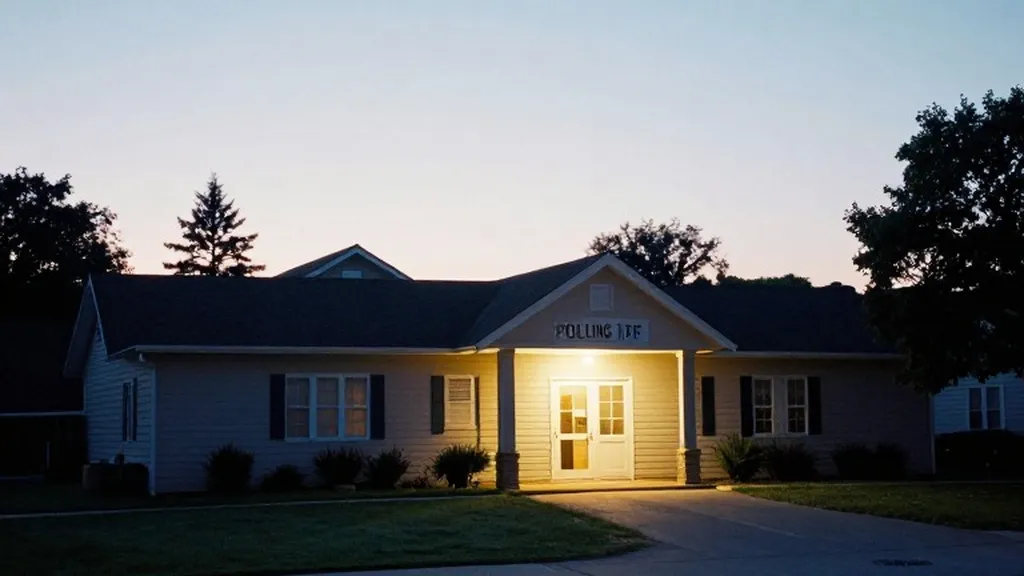
Polling places throughout the county operated from 6:30 a.m. to 7:30 p.m., allowing residents to cast their ballots in person. For those who had not yet voted by the deadline, the state encouraged use of the vote.gov resource to locate specific polling sites. The ballot featured a U.S. Senate race with candidates from the Democratic, Green, Libertarian, and Republican parties, alongside every U.S. House seat in the state.
Beyond federal offices, North Carolina voters addressed state Senate and State House races, as well as state supreme court and intermediate appellate court positions. Local elections included contests for school boards and municipal government offices in the county’s various towns. Ballot measures also appeared on the slate, including a Property Tax Levy Limit Amendment and a measure to reduce the income tax rate cap from 7% to 3.5%.
The U.S. Senate race in North Carolina was a key component of a national trend where Democrats made significant gains. According to election results compiled by Ballotpedia, Democrats flipped seven U.S. Senate seats from Republican control, including the North Carolina seat which was previously held by a Republican but had no incumbent running in 2026. This victory contributed to a projected Democratic majority in the U.S. Senate, with Democrats winning 20 seats and Republicans 13 as of 4:00 p.m. ET on November 9.
Statewide, the 2026 election did not include a contest for governor, as no incumbent was running and no special election was scheduled for that office. However, the state’s legislative map was fully up for election, with all seats in both the State Senate and State House on the ballot. The results in North Carolina were part of a broader national wave where Democrats won a plurality of state government trifectas and a majority of governorships nationwide for the first time since before the 2010 elections.
In the U.S. House of Representatives, all 435 seats were contested, including those represented by North Carolina. Democrats won 250 seats and Republicans 157 as of 4:00 p.m. ET on November 6, with 28 seats still uncalled. This net gain of at least 41 seats secured a strong Democratic majority in the lower chamber, ending Republican control which had held a 220-215 majority heading into the 2026 elections.
Local offices in Mecklenburg County were also decided on Tuesday, with voters selecting representatives for school boards and municipal governments in towns such as Charlotte, Concord, and Gastonia. The election also included contests for intermediate appellate courts, which handle appeals from lower state courts. These local races often reflect specific community concerns, though statewide momentum heavily influenced voter turnout and results in the county’s major urban centers.
Three constitutional amendments were on the North Carolina ballot for voters to consider. The first, a Property Tax Levy Limit Amendment, would require the state legislature to pass laws limiting property tax increases. The second sought to reduce the maximum allowable income tax rate from 7% to 3.5%. The third, a Require Voter Identification Amendment, aimed to mandate photographic identification for all voters, not just those voting in person. These measures represented significant changes to state fiscal policy and election administration.
The outcome in North Carolina aligns with national data showing that Republicans suffered a net loss of at least seven U.S. Senate seats, a threshold that defines a wave election against the president’s party. While the U.S. House did not quite meet the threshold for a wave election, the net loss of 42 seats by Republicans was substantial. This shift in power means that the new Congress, which convenes on January 3, 2027, will feature Democratic majorities in both chambers, altering the legislative landscape for the remainder of President Trump’s term.
For Mecklenburg County residents, the election concluded a cycle that began with a primary on March 3, 2026, and a runoff on May 12, 2026. The final results reflect a electorate that was deeply engaged, with over 59 million people nationwide casting ballots before Tuesday, surpassing early-voter turnout from 2022. The county’s participation in this historic election will shape representation in Raleigh and Washington for the next two to six years.
The next phase of the political process begins in January when the new Congress takes office. In North Carolina, the newly elected state legislators will convene to address the issues raised by the ballot measures and to begin the work of the new session. For now, the results are final, and the county moves forward with a new slate of state and federal representatives who will advocate for the interests of Charlotte, Concord, Gastonia, Huntersville, Kannapolis, and Indian Trail.