Feral deer cost Australia over $91 million annually as control efforts stall
A leaked government report indicates that feral deer populations are expanding across the continent, with South Australia standing as the only jurisdiction to show measurable progress.
By Nathan Reed ·
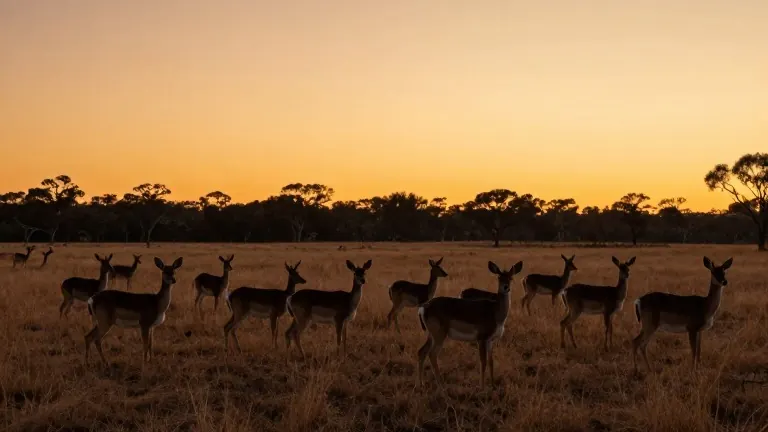
An unpublished government report released to the Invasive Species Council reveals that feral deer cost the Australian economy more than 91 million dollars each year in production losses and management time. The document, which assesses the national feral deer action plan for the period between 2020 and 2025, concludes that the country is failing to curb the spread of the invasive species. The report describes deer as one of the nation's most rapidly increasing pests, noting that their numbers and territorial range have grown significantly during the assessment period.
Reece Pianta, advocacy manager for the Invasive Species Council, stated that the findings confirm observations made by land managers for several years. He described the situation as a result of long-term systemic underfunding of deer control programs. Pianta warned that without intervention, the species could become Australia's next feral pig problem. He argued that while eradication from the entire continent may not be feasible, immediate action could contain or reverse the spread. Pianta emphasized that an intervention now could make a difference to population numbers before the problem becomes unmanageable.
The report card, produced by the National Vertebrate Pest Coordinators, uses a traffic light system to evaluate state and territory performance. It shows that every jurisdiction is failing or floundering in its control efforts, with one notable exception. South Australia received a green rating in all four assessed categories. The report indicated with high confidence that the state had decreased the abundance, distribution, and environmental and agricultural impacts of deer. No other state or territory received a single green pass.
New South Wales and Tasmania were given red ratings in all four categories. Queensland and the Australian Capital Territory each received three red ratings and one yellow rating. The report notes that six species of feral deer are established in Australia: chital, fallow, hog, red, rusa, and sambar. Well-established populations exist across south-eastern Australia, where densities are highest. Smaller, more localized populations are found in South Australia, Western Australia, and the Northern Territory.
Prof. Euan Ritchie, president of the Australian Mammal Society and a professor at Deakin University, said he was not surprised by the findings. He stated that governments are failing to invest enough to control deer populations and mitigate their impacts on agriculture, native wildlife, the environment, road safety, and culturally significant sites. Ritchie described the report as a result of sustained failure to act sufficiently. He noted that the elusive species has increasingly encroached upon major cities, leading to more frequent encounters.
In South Australia, the state government launched a statewide eradication plan in 2022. Prof. Andrew Lowe, director of the Environment Institute at the University of Adelaide, said the report's positive assessment for South Australia aligns with ground-level observations. Lowe noted that the state grappled with the issue in earnest after an agricultural impact estimate showed that 36 million dollars worth of annual damage was set to increase to 241 million dollars by 2031. A 4 million dollar eradication program has led to a massive decline in deer numbers in recent years.
Lowe pointed out that deer are now seeking refuge on the fringes of urban areas, where culling is more expensive. He estimated that functional eradication of deer from South Australia would require approximately 10 million dollars over the next 10 years. Lowe argued that the cost of inaction is of a different magnitude, comparing the 10 million dollar investment to the potential 240 million dollar loss. He stated that if the state does not proceed, the population will rise again, returning the region to its previous problematic status.
Source: The Guardian