Jet lag in birds: Manx shearwaters show off-course flight errors
A study in Science reports that Manx shearwaters navigating back to their nests veer up to seven degrees off course when their internal clocks fall out of step with the sun.
By Nathan Reed ·
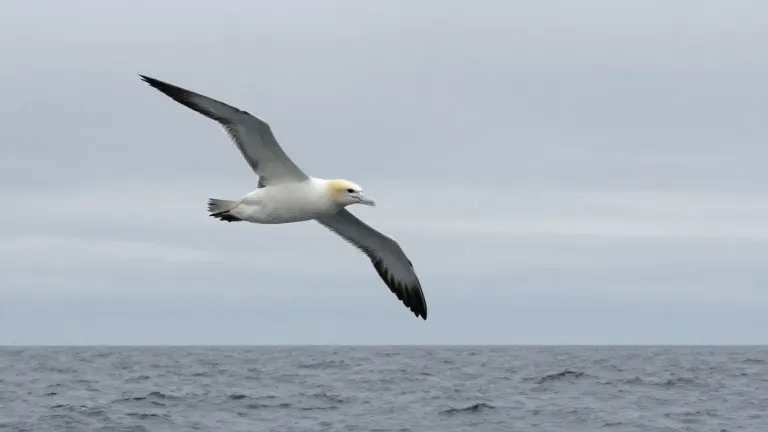
Manx shearwaters flying home across the North Atlantic sometimes take a wrong turn, and the reason looks familiar to anyone who has crossed time zones. Research published in the journal Science found that some of these seabirds become slightly disoriented on long flights because their internal clocks fall out of sync with the sun's position in the sky. The maximum deviation observed was seven degrees, which on a 600-mile journey puts a bird about three miles off course. Patrick Lewin, a behavioral ecologist at the University of Oxford, called the extra distance "a really small addition."
Manx shearwaters are common in the British Isles. Lewin said they resemble seagulls but are actually very closely related to an albatross. Pairs mate for life and lay one egg. One partner sits on the egg without a break while the other goes to sea, sometimes for up to two weeks, hunting fish and squid across hundreds of miles of the North Atlantic. When a hunting partner's belly is full, Lewin said, "they absolutely bomb it back to their colony," sometimes covering the return trip in a day or so.
The timeline behind the finding stretches back two decades. For 20 years, Lewin's colleagues had been attaching GPS trackers to shearwaters and logging their flights out to the Atlantic and back. Lewin reasoned that he could read any jet lag in that record, because shearwaters are believed to navigate by the sun. "To use the sun as a compass you have to know what time of day it is," he said. The sun sits in the east in the morning, slightly south at midday in the northern hemisphere, and in the west by evening. A bird carrying the wrong time of day would therefore fly the wrong direction.
Lewin and his colleagues found that as shearwaters hurry back to their partners and eggs, they drift slightly off the correct heading. Alice Boyle, a biologist at the Centre for Animals on the Move at Western University in Ontario who was not part of the study, said the work stands out for showing navigation decisions as they happen. "It's using these wild birds that travel to completely remote places and we're able to learn so much about how they do that," she said.
The study appears in Science. Lewin said he could not provide the exact date of publication. Boyle said studies that record navigation choices in the field are rare, noting that creatures from corals to chipmunks must find their way through their environments.
Source: Central Florida Public Media