Breaking: AI Reckoning: Tech Stocks Crash as Voters Reject Data Centers
Susannah Streeter warns that the bubble fears predate the election, while industry leaders express surprise at the community backlash against AI infrastructure.
By Ryan Carter ·
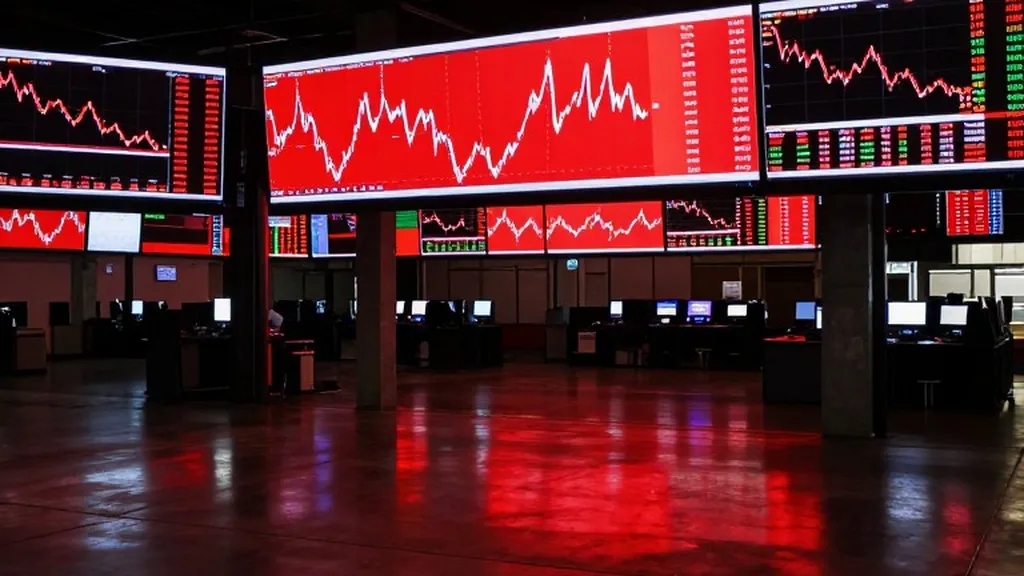
The artificial intelligence trade faced a severe reality check on Thursday as Wall Street experienced its sharpest decline in months. The S&P 500 fell 4.3 percent, marking its worst day since April 2025, while the Nasdaq Composite dropped 5.5 percent. This sell-off erased the previous day's record high and wiped an estimated 2.5 trillion dollars from the Nasdaq, pushing the index into correction territory. For local readers, this represents a tangible loss of value in the retirement accounts and savings held by millions of Americans, including those in Mecklenburg County.
The immediate catalyst was the Democratic sweep of the House and Senate in Tuesday's midterm elections. Voters across the country rejected measures aimed at restricting data center development, signaling a desire to slow the rapid expansion of AI infrastructure. In Texas, Democrat Gina Hinojosa won the governorship on a platform that included an immediate moratorium on new data center construction. This political shift has heightened concerns that state-level restrictions will create significant hurdles for the companies driving the AI boom.
Susannah Streeter, chief investment strategist at Wealth Club, noted that fresh panic over the AI trade has hit Wall Street hard. She warned that fears about the vast sums poured into AI infrastructure may not deliver the returns investors have been banking on. These concerns are now colliding with the prospect of a sharp slowdown in data center construction. Streeter's assessment highlights a growing unease that the industry's growth may be outpacing its actual economic value, a bubble worry that existed before the election results were known.
The tech industry itself appears taken aback by the scale of the public backlash. Greg Brockman, president and co-founder of OpenAI, spoke at the WSJ Tech conference in Napa, California, on Wednesday evening. He stated that everyone had been surprised by the reaction to data centers and that more work was needed to bring communities on board. Brockman explained that the industry has realized it cannot simply announce from San Francisco that projects in Texas or Georgia are beneficial. He emphasized the need to be present in those communities to build trust and support for the infrastructure build-out.
Dina Powell McCormick, president of Meta, shared similar sentiments at the same conference. She told the audience that the industry needs to double and triple down on telling the story of AI. This suggests a strategic pivot where major tech companies will focus on public relations and community engagement to mitigate the political and social friction surrounding their expansion. The surprise expressed by both leaders underscores a disconnect between the tech sector's internal confidence and the broader public sentiment that has now become a market force.
The selling was not limited to AI stocks but spread across every sector of the S&P 500. The Dow Jones Industrial Average fell more than 1,800 points, or 3.4 percent, to close at 51,868. This drop erased the gains made on Wednesday, when the market had seen its biggest daily gain in months. Nvidia, a key player in the AI hardware market, fell 9.2 percent, losing more than 400 billion dollars in market value. The Philadelphia Semiconductor Index fell more than 12 percent, reflecting the intense pressure on chipmakers that are central to the AI supply chain.
Investors also moved into safety, with the 10-year Treasury yield falling to 4.83 percent, its lowest since September. This move indicates a preference for lower-risk assets during periods of high uncertainty. The Cboe Volatility Index, often called Wall Street's fear gauge, jumped more than 11 points, its biggest one-day move since April. Nearly 800,000 VIX call options traded by midday, a volume 3.5 times the 30-day average, signaling that traders are aggressively hedging against further downside risk.
Analysts are divided on the long-term implications of this crash. Ted Parkhill, founder of Incline Investment Management, described a market moving from the promise of AI to the price of AI. He noted that while AI will be transformative in the long run, not every related stock is priced appropriately. Neil Wilson, an investor strategist at Saxo UK, called the event a complete capitulation-level event, suggesting that the nature of sell-everything markets requires a search for stability before a clear recovery can begin. This divergence of opinion leaves individual investors navigating a landscape of heightened volatility.
For the small investor, this day serves as a reminder that market leadership can shift rapidly based on political and social factors. The crash highlights how the cost of AI development is being scrutinized by both markets and voters. As the industry works to refine its community outreach, as described by Brockman and McCormick, the financial markets will continue to price in the risk that the AI boom may face structural headwinds. The coming weeks will test whether the market stabilizes or if the correction deepens, a decision that will impact the net worth of savers and retirees across the region.
The Nasdaq is now more than 11 percent below its record set last month. This level of decline defines a correction, a significant drop that often precedes a period of consolidation. While some strategists predict a bounce back, the combination of political shifts and bubble fears creates a complex environment. The market's reaction to the AI reckoning is a clear signal that the era of unchecked growth in this sector may be giving way to a period of careful evaluation and community negotiation.
Source: BBC News, The Guardian with Reuters, The New York Times, CNBC
More Business · Business Watchdog · Report a business · Got a Story?