Ukraine Sends 15 Kilometers of Troops Into Gas Pipes to Fight Russia
President Volodymyr Zelensky declared the underground campaign a major victory, crediting it with eliminating about 100 Russian soldiers.
By Yasmin Farouk ·
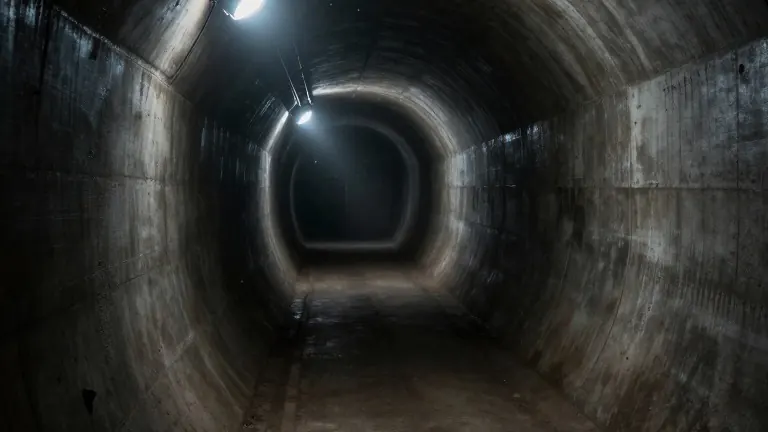
Ukrainian troops advanced 15 kilometers through a gas pipeline with a diameter of just 1.2 meters during Operation Veles. President Volodymyr Zelensky declared the campaign a great success last week. The operation focused on a disused pipeline running beneath the Oskil River in the Kupiansk region.
Zelensky stated that Ukrainian forces eliminated approximately 100 Russian soldiers during the fighting. He added that more than 30 Russian troops were taken prisoner. The battles took place underground, away from the immediate line of sight of surface observers.
The New York Times reported at the end of October that the Ukrainian army has moved the conflict into the network of tunnels around Kupiansk. For nearly two weeks, Kyiv has shown Western media outlets the conditions inside the pipeline. The goal was to secure the tunnel's entry point.
Huseyn Aliyev, a war specialist at the University of Glasgow, noted that Russia pioneered these tactics. He said Ukrainian forces are now adopting the same methods. Aliyev added that this is the first known instance of Ukraine using these specific underground maneuvers.
Will Kingston-Cox from the International Team for the Study of Security pointed to Avdiivka in January 2024. He said Russian troops used a drainage conduit to reach the rear of Ukrainian positions. Moscow later used similar tactics to retake Kursk from Ukrainian control.
Ryhor Nizhnikau of the Finnish Institute of International Affairs explained that Soviet-era infrastructure enables these moves. The pipelines span the Kharkiv, Luhansk, and Donetsk regions. Nizhnikau said both sides possess detailed maps of these networks.
Gustav Gressel, a military analyst at Austria’s National Defence Academy, said urban wastewater systems could also serve as battlefields. He noted that radio-controlled drones often lose their signal at tunnel entrances. Fiber-optic drone cables frequently snag in tight corners.
Kingston-Cox said the saturation of attack and reconnaissance drones makes surface assaults risky. He described the tunnels as a way to break local deadlocks. Aliyev agreed that such tactics cannot be replicated across the entire front due to limited infrastructure.
Source: France 24