
Oxfam Retail Profits Drop 23% as Online Rivals Reshape Secondhand Market
British Heart Foundation plans to close 150 stores after a sharp decline in earnings, while total UK spending on used clothes reaches an all-time high.
By Nathan Reed ·
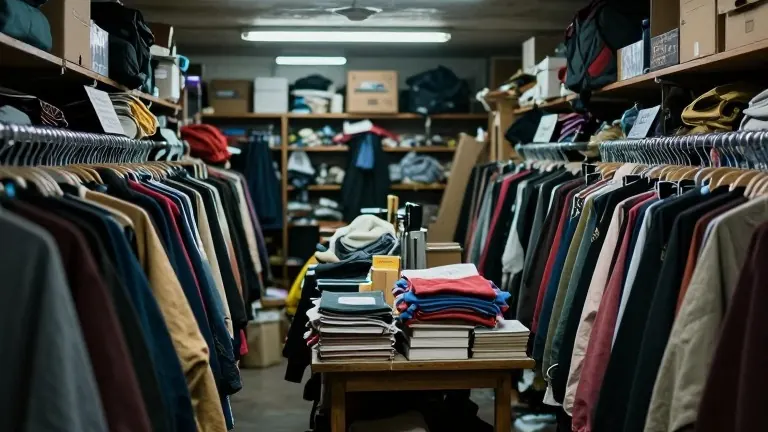
Charity shops in the United Kingdom have long served as the primary channel for disposing of unwanted clothing, but financial records indicate a sharp downturn in this sector. Oxfam’s retail division reported a 23 percent drop in profits for the last financial year, falling to £4.9 million from £6.4 million in the previous period. These figures come from unpublished accounts reviewed by the Financial Times.
The British Heart Foundation, which operates the largest network of charity shops in the country, announced plans to close 150 locations. The charity recorded a loss in the most recent financial year. Other major organizations, including Cancer Research UK and Scope, have also closed or are in the process of closing several stores.
This decline in charity shop revenue occurs despite a massive increase in consumer spending on secondhand clothing. Total UK expenditure on used garments quadrupled over the past decade to reach £8.8 billion annually, according to data from GlobalData. The shift in spending habits suggests that buyers are moving away from physical stores toward digital alternatives.
Websites such as Vinted and Depop have become dominant platforms for this trade. These online services allow individuals to sell clothes directly to other consumers, often for a personal profit. Previously, many of these items would have been donated to high street charity shops. This change in consumer behavior is directly competing with the traditional donation model.
Lorna Fallon, head of Oxfam’s retail operation, described the current climate as challenging and predicted that the sector would face pain. Oxfam’s latest filings show that for every £100 spent in its shops, only £6 now goes toward global poverty alleviation work. In 2022, that ratio was £22. Despite the financial strain, Oxfam has no plans to reduce its shop count due to its focus on books and music.
The British Heart Foundation conducted a review of its retail arm in June after profits plunged from £18.8 million in 2024 to £3.6 million in the year ending March 2025. The charity cited an exceptionally challenging trading environment. It aims to close 90 stores by March 2027 and another 60 by March 2028. The retail division employs nearly 3,700 staff members.
Physical stores face higher overheads than digital platforms, including rent for high street locations and warehouses. They must also manage the costs of collecting, sorting, pricing, and storing inventory. Tansy Hoskins, author of Charity Shop World, noted that the quality of donated clothes has dropped significantly. She described seeing avalanches of poor-quality items as people use shops as dumping grounds for unwanted purchases.
Robin Osterley, chief executive of the Charity Retail Association, acknowledged that fast fashion has impacted donation quality. However, he stated that online platforms are not viewed as a major threat. Osterley argued that these sites normalize secondhand shopping, which benefits the entire sector. He also noted that many people buy from charity shops to resell on these platforms, providing a steady income stream for members.
Osterley identified the November 2024 budget as a larger financial burden. Increases in national insurance and a lower threshold for these taxes have raised costs for charities that rely on part-time staff. Richard Hawkes, chief executive of Oxfam GB, said the sector must rethink its traditional model. He emphasized that shops provide community presence and engage more than 20,000 volunteers, a role that remains vital despite the financial pressures.
Source: The Guardian
More Business · Business Watchdog · Report a business · Got a Story?