Manhattan water tower roof removed after housing first documented barn owl nest
State officials ordered a halt to demolition work after the structure that sheltered a rare family of nocturnal birds was stripped away on Thursday.
By Nathan Reed ·
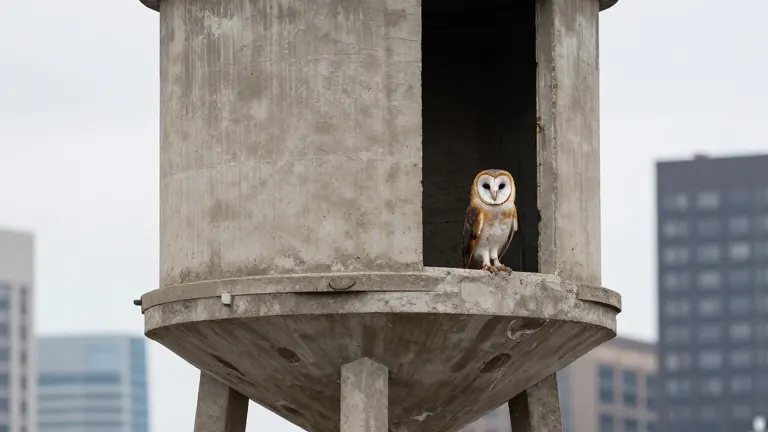
Workers removed the roof of a water tower on the Upper West Side on Thursday, exposing a nest that housed the first documented family of barn owls in modern Manhattan history. The structure sat atop a local building and had become a focal point for nature enthusiasts who gathered in the streets over the past several weeks to observe the birds. The sudden removal of the shelter sparked immediate concern among local residents and conservation groups regarding the safety of the owlets inside.
Jessica Wilson, executive director of the NYC Bird Alliance, stated that she spotted one young owl on the roof of an adjacent building shortly after the work began. She noted that barn owls are nocturnal creatures and generally should not be active in the middle of the day. Wilson reported that the fledgling appeared to have been disturbed from its original perch. She added that her team did not locate any other young owls during their initial assessment of the site.
The NYC Bird Alliance received reports from residents and birders regarding activity at the top of the tower early Thursday morning. Wilson arrived at the location to find that no construction crews were present at the time of her visit. Enforcement police from the state environmental conservation agency also reached the site and gained access to the roof with the permission of the building's superintendent. Upon inspection, Wilson confirmed that the upper section of the water tower where the owls had been nesting was no longer attached to the main structure.
The New York State Department of Environmental Conservation issued a statement confirming that its officers investigated the area. The report indicated that the removal of the roof had exposed the barn owl nest directly to the elements. Department officials instructed the building owner to halt all demolition work on the water tower until further notice. The agency is currently investigating potential violations of environmental regulations related to the handling of the active nest site.
Thomas Obersteiner, a resident of the Upper West Side, provided a visual account of the events. He observed a man using an extension cord to descend from the water tower around noon on Thursday. The building's superintendent declined to answer questions when reached by phone. It remains unclear who owns the property or who specifically authorized the removal of the tower's roof. State Senator Erik Bottcher expressed outrage over the incident in a social media post.
Bottcher stated that the construction work potentially endangered a pair of adult owls and several fledglings. He emphasized that active migratory bird nests are protected under both state and federal law. The senator argued that the city's wildlife requires protection and that there must be accountability when these legal safeguards are breached. David Barrett, a birder who runs the Manhattan Bird Alert account, observed the water tower on Thursday and confirmed the missing roof. Barrett described the nest as incredibly well-known and widely reported in local media.
The incident follows a pattern of public attachment to specific urban wildlife in New York City. In previous years, residents have shown strong support for American woodcocks migrating through Bryant Park in early spring. The city also saw a large turnout for the funeral of Flaco, a Eurasian eagle-owl, in 2024, and the memorial for Pale Male, a red-tailed hawk, in 2023. According to the New York City Department of Parks and Recreation, sightings of barn owls in city parks are very rare. The state Department of Environmental Conservation notes that New York sits at the northern edge of the barn owl's range and that the population has declined at an alarming rate over time.
Wilson explained that barn owl fledglings rely entirely on their parents to hunt for them because the young birds have not yet learned to catch their own prey. The parents typically bring food to the nest for their offspring. With the protective roof removed, Wilson expressed concern that the fledglings might not survive the exposure. The state department is continuing its review of the site while the demolition ban remains in effect.
Source: Stamford Advocate