Israel Police Scale Force to 22,000 for Post-Knesset Vote Security
Authorities expect the highest risk of public order issues after exit polls release at 10:00 p.m., not during voting hours.
By Yasmin Farouk ·
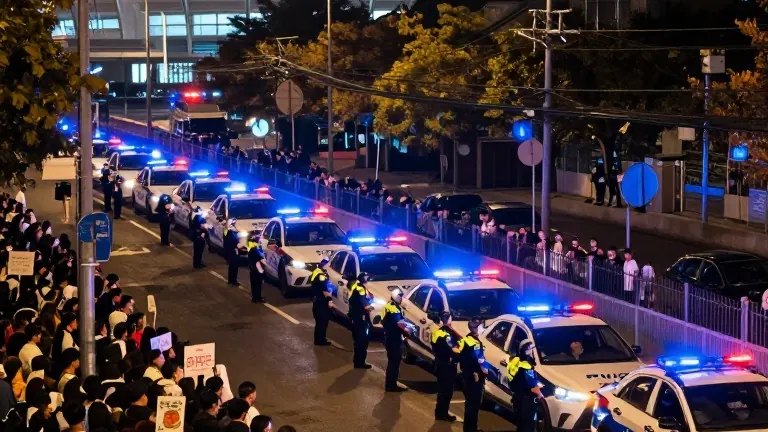
Voters in Mecklenburg County may see international parallels in how security forces handle election night, but for residents of Israel, the focus is on a specific surge in police presence. Authorities have assigned 22,000 officers to secure the 26th Knesset elections, a number that represents a 30% increase from the roughly 17,000 deployed for the previous vote. The primary goal is to manage public order during the hours following the release of exit polls.
A senior police official stated that voting day itself is expected to proceed relatively quietly. The main concern lies in the period after 10:00 p.m. when exit poll results become public. The official noted that these results could prompt citizens to celebrate or protest in the streets. Consequently, police are preparing for potential friction, confrontations, and disorder that may persist through the night, the following day, and into the weekend. Large forces will remain active nationwide after polling stations close.
The security operation includes the protection of five major party gatherings. Four of these events are scheduled in Tel Aviv, while one is set for the Likud party at the International Convention Center in Jerusalem. The official emphasized that such large-scale political events require substantial police resources to manage crowds and ensure safety.
Prime Minister Benjamin Netanyahu and National Security Minister Itamar Ben-Gvir received a comprehensive briefing on the operational plan. The session covered intelligence assessments, the threat of hostile terrorist activity, and public order concerns. Police have spent approximately three months preparing for this deployment alongside the Shin Bet and the Israel Defense Forces. The prime minister and his ministry director-general reviewed the staff work during the briefing.
Former security officials have raised alarms about the potential for post-election unrest. In August, Maariv military correspondent Avi Ashkenazi reported on a scenario dubbed Operation Capitol. This plan envisions a situation where a political bloc claims the results were forged and acts to undermine public order. The concept was influenced by the January 6, 2021, storming of the U.S. Capitol. A team led by retired Maj.-Gen. Sigal Bar-Tzvi drafted the order to cover claims of widespread fraud and attempts to disrupt the vote count.
A senior retired police officer argued that Police Commissioner Danny Levy should prioritize election night over voting day deployments. He described a dangerous scenario where a bloc leader rejects results and calls supporters into the streets, forcing police to seek assistance from the IDF. Several former police and Shin Bet officials believe this scenario should be the top priority, requiring formal orders on force allocation and exercises at National Headquarters. One former security official warned that failure to prioritize this scenario would be a massive oversight.
Another retired police major general noted that while the Shin Bet and police are responsible for an orderly transfer of power, reliance on the Shin Bet is currently difficult. He pointed to weekly polls aired by a specific news channel that diverge from other surveys, suggesting a narrative of stolen elections could gain traction. He also cited a campaign against the Central Elections Committee and the Supreme Court, along with widespread civilian firearms, as factors that could complicate the situation. He described the upcoming vote as a test of leadership.
Police Commissioner Danny Levy has held periodic conversations with former senior officials who raised these concerns. The deployment of 22,000 officers marks one of the largest security operations for a Knesset election in recent years. The force includes personnel from various districts and specialized units. The operation is designed to maintain public order in a politically charged environment where both winning and losing camps may mobilize supporters.
Source: The Jerusalem Post