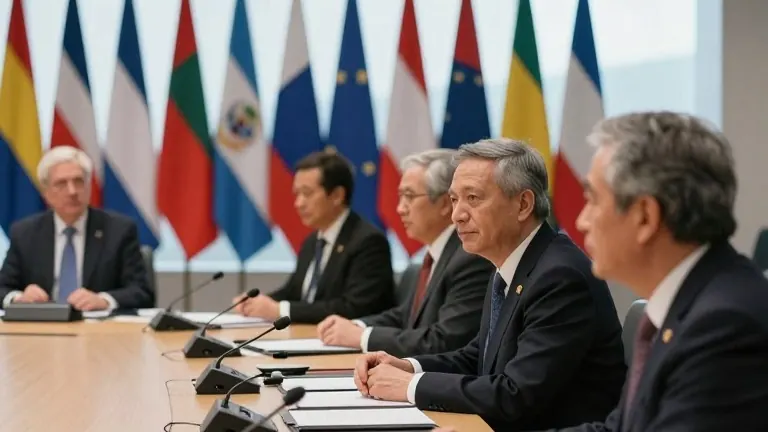
Gadi Eisenkot leads challenge to Netanyahu as Israeli polls open
With no side projected to secure a majority of 120 Knesset seats, the election outcome may hinge on Arab voter turnout and the performance of two new parties focused on conscription.
By Nathan Reed ·
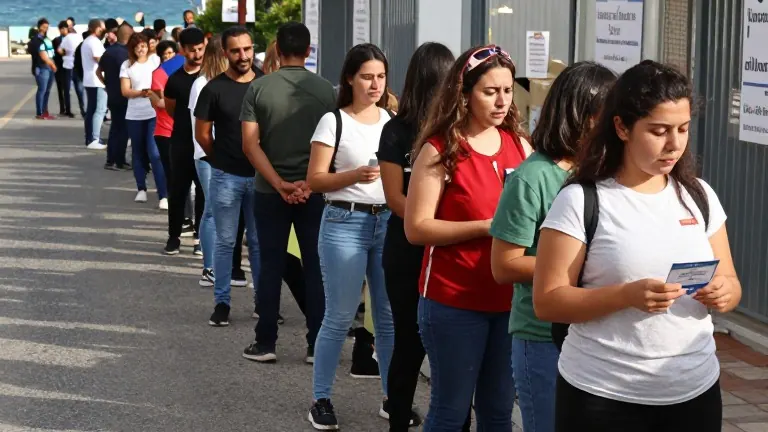
Voters across Israel cast ballots on Tuesday in a contest that polls indicate is likely to end without a clear winner. The race pits Prime Minister Benjamin Netanyahu against a diverse coalition of parties united primarily by their desire to remove him from office. Because most surveys show neither bloc will claim more than 61 seats in the 120-member parliament, the result could trigger weeks of negotiation or a repeat election.
Netanyahu, who has served as prime minister for nearly 17 years, seeks to replicate his current governing arrangement with religious and ultranationalist partners. His campaign rests on two main arguments: that only he can build a government without relying on Arab parties, and that he needs more time to complete military operations in Gaza, Lebanon, and Iran. President Donald Trump endorsed Netanyahu last week, warning that the United States would have to act alone against Iran if Israel elected a different leader. "If Israel has the wrong Leader, which would be anyone other than Bibi, America will have to do this work ourselves, and I am not inclined to do so," Trump said.
Netanyahu’s opponents are led by Gadi Eisenkot, a former military chief who heads the centrist Yashar party. Eisenkot lost his son and two nephews in the Gaza war and served in the wartime cabinet alongside Netanyahu for the first year of the conflict. He frames his candidacy as a return to stability and unity, criticizing Netanyahu’s rhetoric. Eisenkot accused the prime minister of "relying on a campaign of fear-mongering, lies, and threats, including images of nuclear bombs in the heart of Tel Aviv." He promised to launch a state inquiry into the intelligence failures that allowed the October 7, 2023, Hamas attack, a step Netanyahu has blocked.
Yohanan Plesner, president of the Israel Democracy Institute, noted that an indecisive outcome is the most probable result. "It looks like an indecisive outcome is the most likely outcome," Plesner said. He emphasized that voter turnout is a critical variable. Arab Israelis, who comprise roughly 20% of the population, have shown a strong desire to vote to prevent Netanyahu from forming another government with far-right allies. Jehad Abomoch, a cafe owner in Baqa al Gharbiya, described the past four years as a "real catastrophe, both socially and in terms of wars," adding that many feel they have "no hope, no future" under the current leadership.
Two new parties are also competing in the election, both hovering near the threshold required to win Knesset seats. These parties are challenging Netanyahu’s coalition by demanding that ultra-Orthodox men be included in mandatory military service. This issue cuts through Netanyahu’s traditional support base. If either party crosses the threshold, it could tip the balance of power.
In the event of a stalemate, several paths exist for forming a government. Parties might break campaign promises to switch sides, a common occurrence in Israeli politics. Alternatively, the change bloc could attempt to form a minority government by winning more seats than Netanyahu’s side, even if they do not reach 50% of the total. Arab parties could support this by voting for it or abstaining. If no coalition forms, Israel will hold another election. Between 2019 and 2022, the country held five elections due to such deadlocks.
Plesner suggested that if politicians adhere strictly to their campaign pledges and refuse to switch sides, the country will face a new vote. "I'm sure that most politicians are not interested in that," he said.
Source: CBS News