How the Rapa Nui Birdman Cult Ended the Age of the Moai
A ritual race across shark-infested waters and a population collapse from 1,500 to 111 inhabitants transformed a statue-focused society into a mysterious political experiment.
By Natalie Cooper ·
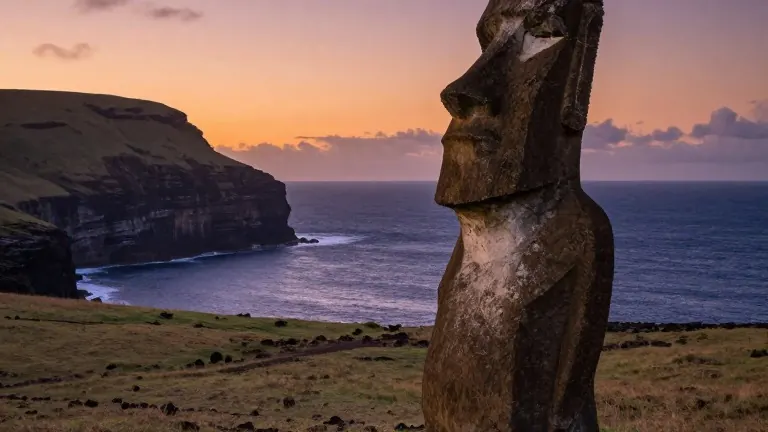
Rapa Nui, known globally as Easter Island, underwent a radical cultural shift in the 17th century when the island’s society moved away from the construction of giant stone ancestors and toward a dangerous annual competition known as the Birdman cult. This transition was driven by tribal warfare and resource depletion, culminating in a system of political control that lasted for approximately 186 years.
The island, located 2,300 miles from the Chilean mainland, was annexed by Chile in 1888. It is a triangular landmass of 63 square miles in the South Pacific. Locals refer to the island as Rapa Nui. The name Easter Island comes from a Dutch explorer who arrived on the Christian holiday of Easter in 1722. The population at any given time was small, yet the island produced nearly 1,000 moai statues between A.D. 1000 and the 1650s.
The moai were carved from compressed volcanic ash. Early versions stood about 3 feet tall and housed the spirits of deceased ancestors. Later, elite chieftains commissioned larger figures, some reaching 33 feet in height and weighing more than 180,000 pounds. These statues often featured 13-ton red hats called pukao. The size of the moai indicated the status of the tribe or spiritual leader it represented. Most statues faced inland, with their backs to the sea, to watch over villages and tribes.
Tribal conflicts intensified around the 17th century as natural resources dwindled. Opposing factions toppled rival statues, breaking them face-first into the ground. This act was considered the highest form of disrespect. Eyes were dug out and shattered to remove the spiritual power of the defeated leaders. No toppled moai stood upright again until archaeologists began restoring them starting in the mid-1950s.
The Birdman cult emerged as a mechanism to select a leader and bring peace. Athletes served as proxies in an annual race that required contestants to descend a 1,000-foot cliff, swim a mile through shark-infested waters, and retrieve the first egg of a migrating sooty tern. The winner had to swim back with the unbroken egg balanced on his forehead and climb back up the cliff. The winner’s chief was crowned the Birdman.
Otea, a local guide and traditional tattoo artist, described the contestants as "crazy" and compared the ritual to the "Hunger Games." The crowned Birdman was considered the reincarnation of the creator god Makemake. He entered isolation for a year, during which he did not bathe or cut his fingernails. He shaved his head, painted it red with sacred mana, and wore a wig made of human hair.
The cult collapsed when Peruvian slave ships captured approximately 1,500 men, nearly half the island’s population. These men were forced into labor in Peru. The few survivors who returned brought smallpox to the island. By 1877, only 111 inhabitants remained. Today, the island is a regulated tourist destination. Visitors require licensed guides to access most sites, and the local economy relies heavily on tourism.
The Rano Raraku quarry, where 95% of the moai were created, now holds 400 statues. Some are half-buried, while others are still attached to the bedrock. One unique statue kneels on a slope, a posture not found elsewhere on the island. Theories on how the statues were transported range from 180 people dragging them on sleds to the statues "walking" themselves. The red pukao hats were carved in a separate quarry about 10 miles away, adding another layer to the logistical puzzle.
Source: The Macomb Daily