Three Rafah commanders killed in one year as Gaza ceasefire stalls
Israel struck a senior Hamas leader in southern Gaza, continuing a pattern of high-level decapitation strikes despite a US-brokered truce that has held for over a year.
By Ryan Carter ·
Israel killed a senior Hamas commander in southern Gaza early Saturday, marking the third top leader of the Rafah Brigade to die in a single year. The strike targeted Samir Mahmoud Abu Younis, who had recently taken command of the unit. Both the Israel Defense Forces and Hamas confirmed the death. The attack occurred days after another Israeli strike hit Nasser Hospital in Khan Younis, leaving the situation in the territory tense despite an active ceasefire agreement.
The loss of Abu Younis follows the deaths of his two immediate predecessors. Nael Abu Obeid, who commanded the Rafah Brigade before Abu Younis, was killed in a September strike. Before him, Mohammad Sabaneh died in May of last year. This rapid succession of command losses illustrates the continued intensity of the conflict even as a nominal truce is in place.
According to the Al-Qassam Brigades, the military wing of Hamas, Abu Younis joined the group in 1991. The statement described him as one of the most prominent commanders involved in planning and overseeing the October 7, 2023, attack on Israel. His death adds to a list of senior figures removed from Gaza in recent months.
Israeli Defense Minister Israel Katz issued a statement following the strike. He said the IDF continues to eliminate Hamas leaders in Gaza. Katz added that the offensive policy he is leading with the Prime Minister and the IDF will continue until Gaza is demilitarized and Hamas is no longer present.
The recent strikes have coincided with a stalled diplomatic process. The Board of Peace, a body created by the Trump administration with UN backing to oversee the ceasefire, has struggled to make progress on the 20-point plan agreed to in October 2025. On Friday, the board reported holding constructive discussions with 17 countries regarding a civilian police force. However, the Palestinian technocratic committee meant to run Gaza has not yet entered the enclave, and an international security force has not materialized.
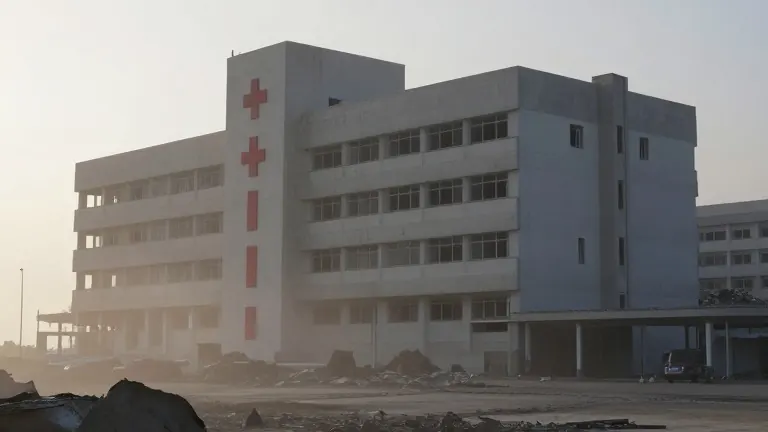
Last week’s attack on Nasser Hospital in Khan Younis drew significant attention. Palestinian officials said at least six people were killed in the strike, which hit the surgery unit. Among the dead were Dr. Rizk Abu Shaira and a 13-year-old boy waiting for surgery. Forty others were injured, including two doctors in critical condition. The IDF stated it was targeting Muhammad Abu Ismail, the commander of the Khan Younis Brigade, and other terrorists hiding in the hospital. When asked if Abu Ismail was killed, the IDF did not provide an answer.
Doctors Without Borders condemned the hospital strike, noting that patients and staff are being killed in places meant to save lives. The organization withdrew its staff from Nasser Hospital in January due to concerns about armed men inside and the hospital’s neutrality. The Board of Peace also urged both sides to protect civilians under the peace plan.
The Palestinian Ministry of Health reports that more than 1,600 people have been killed in strikes since the ceasefire was signed a year ago. As winter approaches, the territory faces a humanitarian crisis. Seasonal rains have swamped tens of thousands of tents housing nearly two million displaced Palestinians. Israel says more than 91,000 tents have entered Gaza for winter, but it has refused to allow heavy equipment needed for cleanup and rubble removal. Israel’s Coordinator for Government Activities in the Territories stated that reconstruction can only begin after Hamas fully disarms.
More World · Charlotte news · Report a business · Got a Story?