South Korea tests Arctic trade shortcut
A 50-day voyage to Europe saved 10 days over the Suez route, but the trip has raised diplomatic tensions with Western allies concerned about Russia.
By Ryan Carter ·
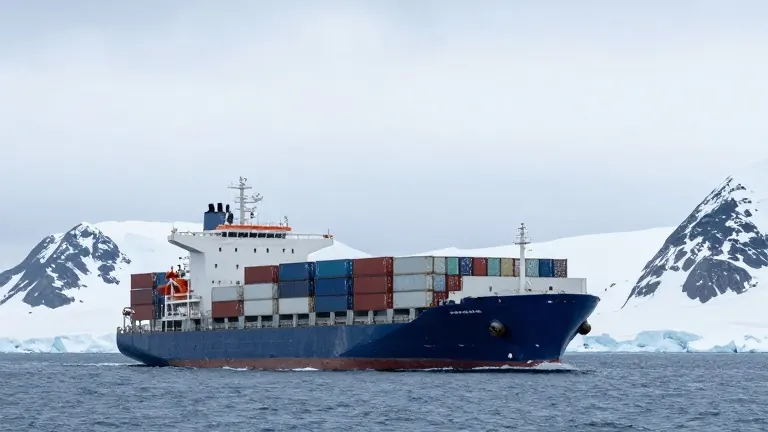
The container ship PanStar Acro spent 50 days on a round trip from Busan to Rotterdam via the Arctic Ocean, a schedule that saved at least 10 days compared to the fastest Suez Canal route. The vessel departed the South Korean port on August 22 and navigated around the northern coast of Russia before stopping in Felixstowe, Rotterdam, and Gdansk.
The Northern Sea Route is approximately 7,000 kilometers shorter than traditional paths through the Middle East. Joseph Kristanto, a maritime security analyst at Singapore's S. Rajaratnam School of International Studies, noted that the route links South Korea directly to European markets while bypassing the northwest Indian Ocean. He stated that the development could lower shipping costs and strengthen Busan's position as a regional maritime hub.
Western European nations are monitoring the move closely due to geopolitical concerns. Analysts indicate that countries opposing Russia's invasion of Ukraine fear President Lee Jae-myung seeks to boost economic ties with Moscow. This approach contrasts with efforts by Kyiv and its allies to isolate the Russian economy. Kristanto warned that developing the route could create a new form of strategic dependency on Russia, which exercises control over navigation along its Arctic coastline.
Moscow holds leverage through regulations and the provision of icebreaker assistance. Kristanto said this control allows Russia to apply pressure on shipping partners. European diplomats also expressed concern over a separate incident in August where approximately 165,000 tons of fuel were delivered to Russia aboard sanctioned tankers. This engagement occurs while North Korea sends troops to support Russia in the war against Ukraine.
South Korean President Lee Jae-myung aims to use this working relationship to sway Vladimir Putin against providing more weapons to North Korea. Andrei Lankov, a professor of history and international relations at Seoul's Kookmin University, suggested that Seoul is sending signals to the Russian government that it is willing to manage relations. Lankov believes this stance was appreciated in Moscow, potentially leading to reciprocal actions regarding military technology transfers to Pyongyang.
Recent diplomatic friction between Seoul and Kyiv has further complicated the region's dynamics. In September, a dispute arose after Ukrainian President Volodymyr Zelenskyy confirmed that two North Korean prisoners of war had been moved to South Korea. Seoul reacted angrily, claiming the transfer violated an agreement on secrecy. The dispute led to demands for apologies and the withdrawal of several South Korean diplomats from Kyiv. Lankov described this row as potentially performative, allowing Lee's administration to distance itself from Kyiv and resist pressure to provide material aid to Ukraine.
The Lee government plans regular commercial services on the Northern Sea Route by 2030. The recent voyage served as a test of logistics for these future operations. According to the Arctic Council, a record 1,812 vessels operated in the Arctic last year, marking a 40 percent increase from 2013. Climate change has made the route increasingly navigable, though commercial ships often require icebreaker assistance.
Kristanto expects Seoul to pursue a cautious and incremental approach to the initiative. He noted that South Korea is unlikely to abandon the route given growing Chinese interest in Arctic shipping. The government aims to preserve this economic opportunity without compromising its fundamental strategic relationships with Western partners. Lankov added that South Korea is currently flying under the radar to prepare for a future where sanctions on Russia may be lifted.
Source: Deutsche Welle
More Business · Business Watchdog · Report a business · Got a Story?