Restoration teams plant cypress in Louisiana after MRGO closure
The closure of the Mississippi River Gulf Outlet has lowered salinity levels, enabling the Pontchartrain Conservancy to report a 95 percent success rate for new tree plantings.
By Ryan Carter ·
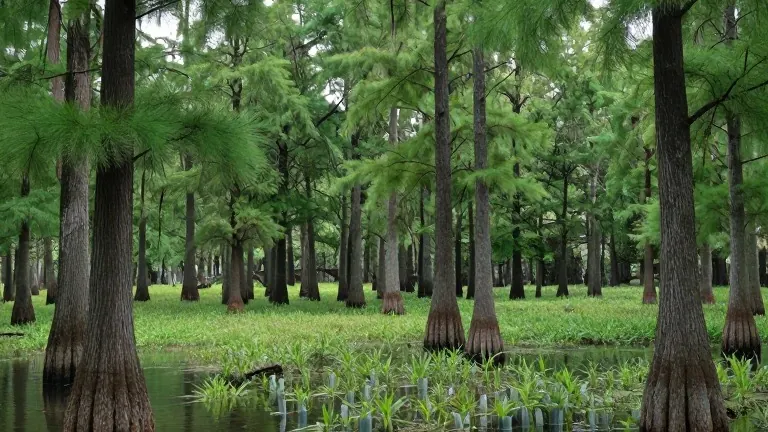
Restoration teams in Louisiana are reporting high survival rates for new cypress plantings following the closure of the Mississippi River Gulf Outlet.
Kristi Trail, who runs the Pontchartrain Conservancy, stated that the success rate from recent plantings now tops 95 percent. This improvement comes after the Army Corps of Engineers installed a rock dam and later a surge barrier to close the MRGO, a waterway built as a shortcut from the Port of New Orleans to the Gulf.
Scientists say the open MRGO funnelled storm surge into St. Bernard and Orleans parishes during Hurricane Katrina and turned Lake Pontchartrain saltier, which helped kill cypress forests surrounding the lake. Trail explained that salt water entering the basin changed the salinity of the soils, causing many trees to die. Since the closure, researchers have monitored salinity levels to identify estuary areas ready for reforestation.
Eva Hillman, chief scientist for the Pontchartrain Conservancy, identified the LaBranche Wetlands in St. Charles Parish as a candidate area for new plantings. The group has planted thousands of trees over the years, including in the Madisonville area along the Tchefuncte River. Each planting requires a nutria guard, often made from recycled plastic, to protect seedlings from invasive rodents. Trail noted that without these guards, tree mortality would approach 100 percent.
A planting from approximately 15 years ago on the east bank of the Mississippi River in Plaquemines Parish now shows trees towering about 30 feet high. The Caernarvon River diversion feeds fresh water and nutrients into that area, increasing the growth rate of the planted trees. Will DeGravelles, director of land protection for the Nature Conservancy, said restoration efforts in the Mississippi River Valley recently reached 1 million acres, though the state has lost 50 to 75 percent of its bottomland hardwood and swamp forests since there were once 25 million acres.
DeGravelles pointed to the National Champion Bald Cypress tree at Cat Island National Wildlife Refuge near St. Francisville as an example of what the forests once looked like. The U.S. Fish and Wildlife Service estimates the 90-foot-tall tree is 1,500 years old. He said the tree survived logging because it was hollow and ill-shaped compared to other massive cypress trees. Regular spring floods from the Mississippi River feed the remaining trees fresh water and nutrients.
Trail said the swamps provide a storm surge buffer that allows levees to function effectively. Conservation groups and a government program that pays farmers to convert marginal agricultural land back into forested wetlands continue to contribute to the work. Some of these land conversions last 30 years, while others are permanent.
More News · Charlotte news · Report a business · Got a Story?