Alaska Shorebird Populations Drop as Warming Weather Shifts Migration Timings
Researchers in Utqiaġvik track declining shorebird numbers and study how earlier springs are desynchronizing food supplies for migrating species.
By Natalie Cooper ·
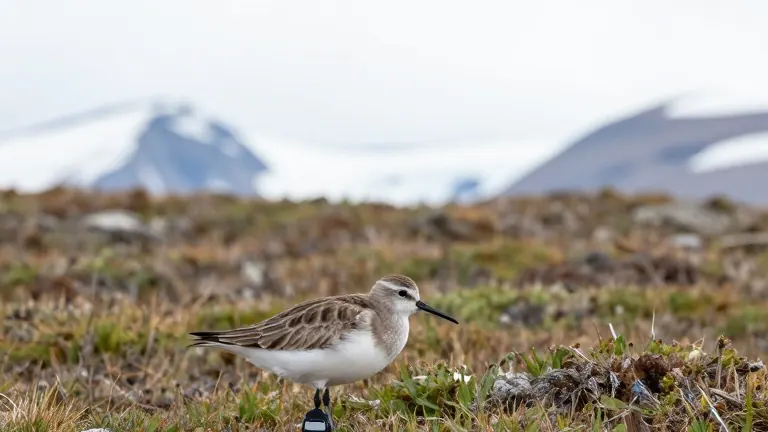
Shorebirds breeding in northern Alaska are facing declining numbers as climate change alters the timing of their food sources. Rick Lanctot, a wildlife biologist with the U.S. Fish and Wildlife Service, has tracked these birds for 24 years. His data shows that nearly half of the 41 shorebird species that breed in Alaska are in decline. Some populations have lost more than half of their numbers over the past 30 years.
The birds, including pectoral sandpipers, migrate over 17,000 miles annually between Alaska and Argentina. They rely on specific wetlands and grasslands for rest stops. Warmer temperatures are causing spring to arrive earlier in the Arctic. This shift means insects emerge sooner, often before the shorebirds and their chicks are ready to feed.
Researchers in Utqiaġvik are using tiny tracking tags to monitor these journeys. The devices attach to the birds' legs and log GPS positions every 15 minutes. The data uploads when the bird flies near a cell tower. These tags reveal that some birds, like bar-tailed godwits, fly nonstop for over 8,000 miles. They push their bodies to the limit, sometimes doubling their weight in fat before takeoff.
Julia Berliner, a graduate student at the University of Texas at Austin, collects insect samples on the tundra. She uses a modified leaf vacuum to capture midges and flies. These insects are the primary food source for shorebird chicks. The insects emerge from thawing permafrost for a brief period during the short summer. If the timing is wrong, the birds miss the peak food supply.
Amanda Koltz, an assistant professor at the University of Texas at Austin, studies the nutritional value of these insects. She notes that different bugs provide different nutrients, such as calcium needed for egg production. When the insect population shifts, the quality of the birds' diet changes. Chicks that hatch late or miss the insect peak have lower survival rates.
Local residents are also noticing the change. Robin Mongoyak, a wildlife guide from Utqiaġvik, remembers when sea ice lasted multiple years. Now the ice breaks up earlier in the spring. Mongoyak says he sees fewer birds than he did 35 years ago. The Inupiat people have historically viewed the arrival of these birds as a special time, a period of celebration after the long winter.
Habitat loss is another factor in the decline. Development and drought are reducing the wetlands and grasslands that birds use for rest. Some farmers in California are now paid to keep rice fields flooded longer to provide temporary habitat. Nathan Senner, a shorebird researcher at the University of Massachusetts Amherst, notes that the unpredictability of these landscapes is making it harder for species to adapt. He says that if declines continue, extinction is a possibility for many of these migratory birds.
More News · Charlotte news · Report a business · Got a Story?