Mecklenburg County pilots affected by FAA communications failure in Arkansas
A malfunctioning router in El Dorado forced a four-hour nationwide ground stop, prompting calls for more funding and scrutiny of the agency's modernization efforts.
By Nathan Reed ·
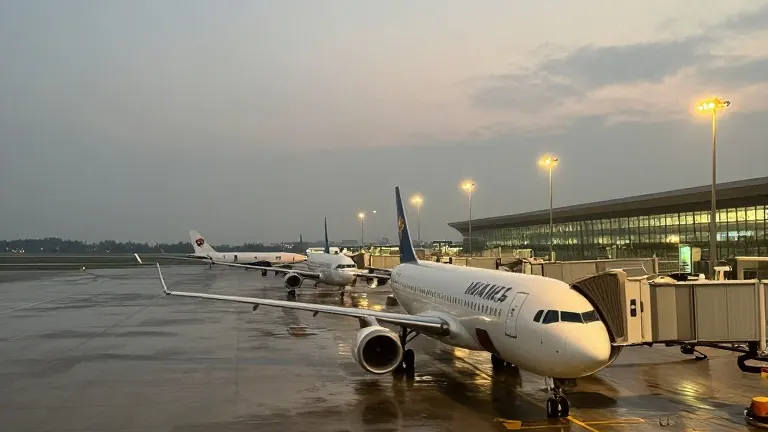
Pilots and passengers across Mecklenburg County, including those at Charlotte Douglas International Airport, waited on the ground last Friday after the Federal Aviation Administration imposed a nationwide stop. The halt lasted more than four hours and was triggered by a failure in a new router installed in El Dorado, Arkansas. The malfunction sent intermittent signals to 17 of the 22 regional air traffic control centers that manage high-altitude flights.
Transportation Secretary Sean Duffy stated that the closure was necessary because the system became unreliable. The FAA lifted the ground stop in the evening. Duffy increased his request for additional funding to $50 billion to complete overdue infrastructure upgrades. He previously sought $30 billion from Congress, which approved $12.5 billion last year for the project.
The $12.5 billion package is designated for replacing outdated technology, including copper wires, floppy discs, and 1980s-era radars. However, much of that money will also fund runway upgrades and other construction. Duffy told lawmakers on Sunday that the agency cannot spend money on new radars until they are built, which may not happen until next year. Democrats on the House Appropriations Committee questioned why they should approve more funds when the FAA has not fully spent its current allocation.
Experts argue that the current problems stem from decades of underfunding and staffing shortages. Mike McCormick, a former FAA air traffic control overseer and current professor at Embry-Riddle Aeronautical University, described the situation as the result of long-term neglect. Tom Lintner, an aviation safety consultant and former top FAA official, noted that this was the second nationwide grounding caused by technical issues in less than four years. He pointed out that the agency has struggled to modernize its systems for 40 years without major disruptions.
The air traffic control network relies heavily on contractors due to a limited staff of government technicians. L3Harris, a private company, owns and maintains the specific system that failed. Their technicians were replacing old copper wires in Arkansas when the new router malfunctioned. The head of the technicians' union said the agency did not consult them about the work. Duffy responded that the FAA does not own the network, so he did not feel the need to seek their input.
Similar communications outages have disrupted flights in the past. In September, primary and backup lines failed at a key facility in Philadelphia. Flights in Minneapolis and Dallas also faced disruptions over the last year. The previous nationwide grounding occurred in January 2023, when a contractor error affected the system that distributes flight hazard notices to pilots. That upgrade had been delayed for years before the failure occurred.
Aviation safety expert John Cox suggested that the work might have been safer if scheduled for the middle of the night. He noted that thousands of miles of copper wire have been replaced in recent years without incident. However, former FAA executive Mike O'Donnell argued that the agency must take responsibility for the system's safety, regardless of who performs the repairs. He stated that the FAA is accountable whether a contractor or an employee makes the error.
Duffy and President Donald Trump have blamed the Biden administration for the state of the infrastructure, but the issues date back further. Rick Castaldo, a former FAA electrical engineer, doubts the agency will finish the overhaul on time. He warned that with Democrats taking control of Congress in January, politics could make funding more difficult. He fears that many projects will be left half done if the money is cut.
More News · Charlotte news · Report a business · Got a Story?