New Mexico officials seek public input on basic internet needs
A $675 million federal investment is underway, but state leaders want residents to define what adequate connectivity actually looks like for daily life.
By Yasmin Farouk ·
The New Mexico Office of Broadband Access and Expansion is accepting public comments until Dec. 9 to establish a Minimum Digital Living Standard. This baseline will determine the minimum level of internet service and digital tools required for residents to participate in modern society. The agency is looking for input on what constitutes sufficient access for education, healthcare, and work.
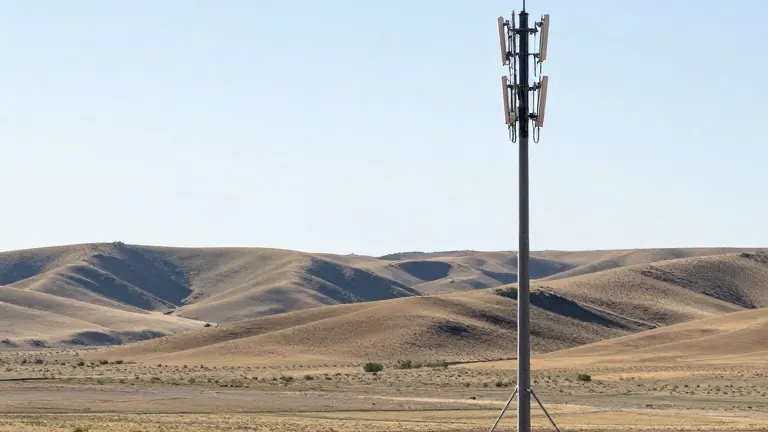
The state has secured substantial federal funding to build out this infrastructure. New Mexico has received $382 million from the federal Broadband Equity, Access and Deployment program to connect homes and businesses. An additional $293 million is allocated for nondeployment uses, such as installing 5G towers and connecting schools, libraries, and health centers. State officials are currently waiting for instructions on how to spend that second portion of the funds.
Jeff Lopez, the director of the state broadband office, emphasized that connectivity is a foundational requirement for rural access to telehealth and workforce development. He noted that while the federal program has faced some rule changes and delays, the state remains on track to receive the money. "Whether it’s workforce development or education or telehealth, telemedicine, rural access to healthcare, there is so much of modern life that relies on access to the internet," Lopez said.
State lawmakers also passed a Low-Income Telecommunications Assistance Program earlier this year. This initiative will provide up to $10 million starting in December to help low-income families pay for service. The program is designed to expand to $45 million annually in future years, a level intended to serve 100,000 families across the state.
The proposed standard goes beyond the Federal Communications Commission’s current benchmark of 100 megabits per second download and 20 megabits per second upload. Lopez explained that the new standard will also address equipment gaps and digital literacy. Data from the state office shows that nearly 23% of New Mexicans still lack a desktop or laptop computer, a barrier that speed alone does not solve.
The FCC designated about 10% of addresses in the state as underserved or unserved in 2024. A report published in October by the state broadband office indicates the state is on track to reach 94% adequacy by the end of 2026. Public feedback will help shape future programs and potential legislation regarding internet access in the state.
Source: Searchlight New Mexico