New 20-person task force in Tampa tracks Iran's land trade
US Central Command established the unit on November 7 to monitor supply routes across Iran's borders and the Caspian Sea.
By Natalie Cooper ·
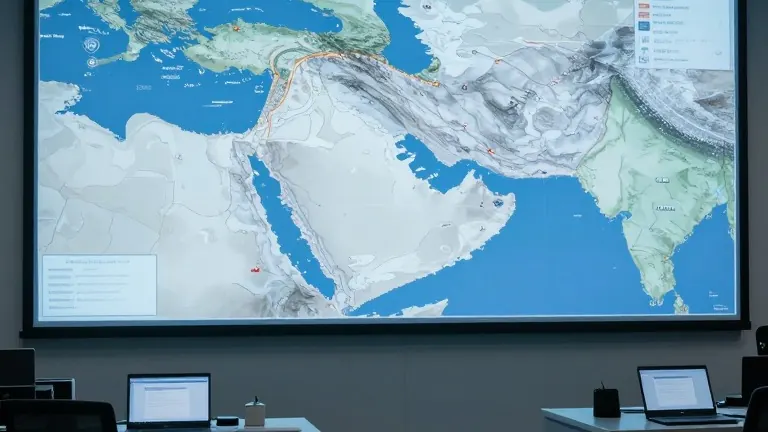
US Central Command announced the creation of Task Force Iron Gate on November 7, a 20-person civilian and military team based in Tampa, Florida. The unit coordinates with other government agencies to track how Iran moves advanced weapons, dual-use technologies, and sanctioned materials over land and across the Caspian Sea.
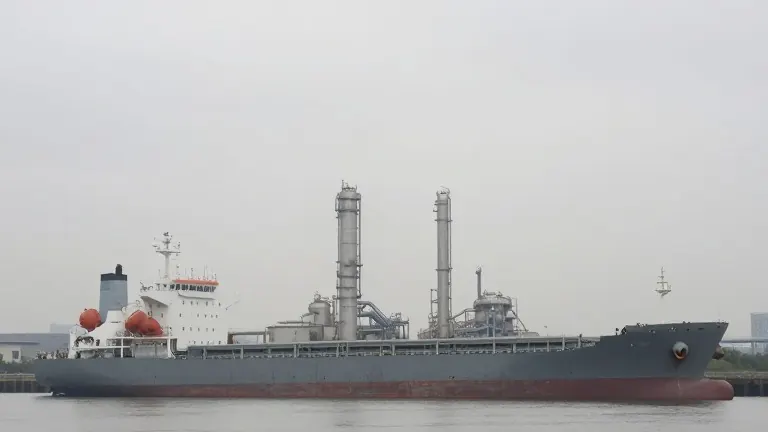
The move complements a naval blockade that CENTCOM estimates has stopped more than $25 billion in crude oil exports. Despite those maritime restrictions, a Reuters investigation found Iran imported at least $2 billion in hardware, explosives, and heavy trucks between January 2025 and June 2026. Those goods arrived on cargo ships from Russia, trucks from Central Asia, and aircraft from China.
Farzin Nadimi, a senior fellow at The Washington Institute, said the task force integrates agencies already monitoring sanctions and collecting intelligence. He noted that while naval restrictions block high-volume shipments from China, land routes through Russia still carry electronic parts for drone production. "Nothing can replace maritime transport because of its enormous capacity," Nadimi told RFE/RL's Radio Farda. He added that the new unit does not necessarily signal a plan to use military force against suspect vehicles.
Nahid Jafarov, an Azerbaijani political expert and former diplomat, argued the task force's practical impact may be limited to information gathering. He suggested Washington could use the initiative to pressure Tehran during negotiations. The US Treasury Department was contacted for comment but had not responded as of publication.
The Caspian Sea complicates enforcement because the United States has no direct territorial access to the water. The route is enclosed by Iran, Russia, Azerbaijan, Kazakhstan, and Turkmenistan. Lloyd's List Intelligence reported that active Russian- and Iranian-flagged vessels in the Caspian rose 21 percent year on year in August, though shallow waters and rail bottlenecks limit capacity.
Amir Chahaki, a Europe-based analyst, said Washington could not easily restrict Iran's northern supply routes without accounting for Moscow. "It is inconceivable that ships traveling from Russia to Iran could be attacked or targeted by drones," Chahaki said. He expects the US to focus on expanding sanctions against logistics operators rather than engaging Russian vessels directly.
Regional cooperation remains inconsistent. Iraq, which gets more than a third of its natural gas from Iran, refused a US request to close all but two border crossings. Pakistan suspended commercial trade at two key crossings on October 17, stranding about 2,000 trucks, according to the Quetta Chamber of Commerce and Industry. A Pakistani official told RFE/RL that informal imports of Iranian liquefied petroleum gas continued through unofficial channels.