Federal Waiver Extends Hospital-At-Home Care Through 2030
More than 350 hospitals nationwide now operate similar programs that deliver hospital-level care in a patient's residence.
By Nathan Reed ·
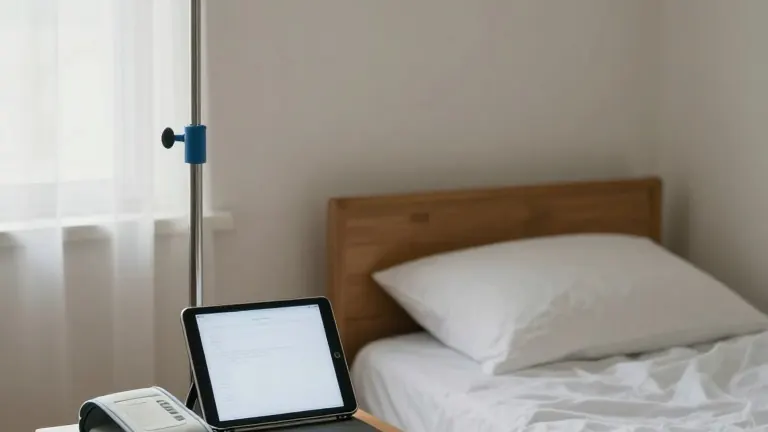
Patients with congestive heart failure, COPD and infections can receive nursing visits and doctor check-ins at home under a federal program that has now been authorized through September 2030. To qualify, a patient must live within 30 minutes of a hospital and be stable enough for home monitoring. Nurses visit at least twice a day, physicians check in by video, and the provider supplies a tablet, monitoring equipment and internet access.
Colleen Callahan, 75, entered the program in 2024 after bacterial pneumonia settled in both lungs. She spent three days in the hospital before her care team at OSF Healthcare in Peoria, Illinois, offered her a spot in the OnCall Digital Hospital program. "I was asked if I wanted to consider something new called digital hospital," Callahan said. She declined at first. "I was concerned that I wasn't well enough to go home," she said.
Callahan later agreed and spent five days in the program. She said her husband and daughter felt supported throughout. "To be able to be in your own home with your family helps the family as well, not just the patient," Callahan said. Her insurance covered the costs, which are billed at the same rate as a hospital stay.
More than 30,000 patients have been treated through hospital-at-home programs, and similar setups run at more than 350 hospitals nationwide. Akin Demehin of the American Hospital Association called the model "one of the most promising care innovations that we have seen emerge over the past several years." He said hospitals still handle surgeries and other care that requires a physical facility.
A 2024 Centers for Medicare and Medicaid Services study found lower readmission rates and fewer hospital-acquired infections among hospital-at-home patients for certain conditions. Tom Kiesau of the Chartis Group said reduced hospitalizations among Medicare patients lower spending on the taxpayer-funded program. He said he could not say when that would translate into savings for individual taxpayers.
Medicare reimbursement for home-based hospital care depends on a waiver from the Centers for Medicare and Medicaid Services. That waiver was previously extended in short increments after the pandemic; Congress approved it through September 2030 with bipartisan support. Krista Drobac of Moving Health Home said the extension brings regulatory certainty and she wants the model made permanent.
A 2022 study in JAMA Health Forum found the program "does not offer sufficient consideration of the role of and effects on family caregivers." Drobac said her research shows caregivers report less stress because a team is available to answer questions. According to Moving Health Home, 85% of people who received hospital-at-home care said they would recommend it to family and friends.
Source: WBTV · original report published
More News · Charlotte news · Report a business · Got a Story?