Army Detonation: Lead Azide Barrels Destroyed in Iowa
The 68 barrels of lead azide were removed in a controlled blast in Middletown, with officials lifting the shelter-in-place order after monitoring showed no detectable lead.
By Ryan Carter ·
The U.S. Army successfully detonated 68 barrels of degraded lead azide in Middletown, Iowa, on Wednesday morning.
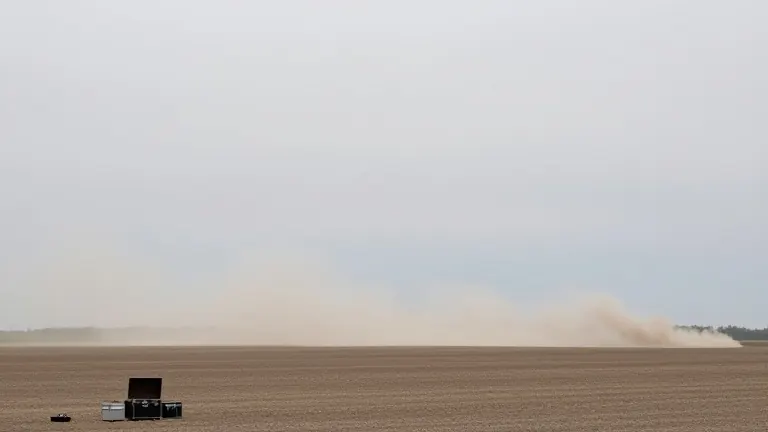
At 9 a.m., the controlled explosion destroyed the explosives that military officials said were prone to spontaneous detonation. The blast was the culmination of a multi-agency operation involving the Army, the Federal Emergency Management Agency, and the Bureau of Alcohol, Tobacco, Firearms and Explosives.
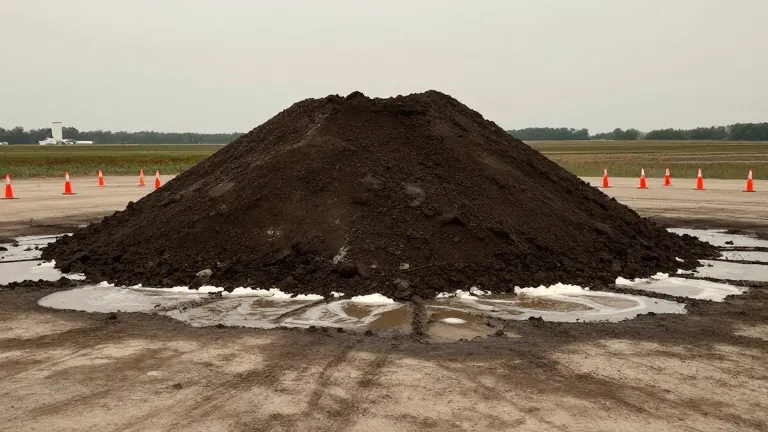
Maj. Gen. Eric Shirley, commander of the Army Sustainment Command, described the operation as tremendously successful during a news conference later that day. He stated that all 68 barrels were definitively removed. Shirley credited a mitigation strategy that included more than 3,600 gallons of aqueous foam applied to the site to absorb lead particles from the blast.
"I believe absolutely that we reduced, as close to zero as is absolutely humanly possible, the risk to the health and safety of the people of Middletown and the extended communities throughout Iowa," Shirley said.
The Federal Emergency Management Agency lifted the shelter-in-place order in the evening. Agency Administrator Cameron Hamilton said residents could safely resume normal activities. He noted that ongoing air monitoring showed no detectable lead. Hamilton said additional resources and testing would be deployed in the days following the blast.
EPA Administrator Lee Zeldin told CNN that initial feedback from the Department of Defense indicated the mitigation efforts exceeded expectations. Zeldin pointed out that EPA monitors on the ground detected no lead concentrations in the surrounding area. He urged residents to wait for additional data before returning outside, citing the premature declarations of safety after the Sept. 11, 2001, attacks.
The U.S. Environmental Protection Agency collected more than 1,200 air, land, and water samples prior to the detonation. A dashboard maintained by the agency reported zero detection of airborne lead throughout the region. The agency said its monitors never stopped collecting data during the event.
The Iowa Department of Health and Human Services said it believes the risk of breathing in harmful amounts of lead from the event is low. The department stated it will continue reviewing environmental monitoring information, including soil sampling results, to determine if further public health recommendations are needed.
The operation was delayed from its original Nov. 20, date due to public outcry and a lawsuit filed by environmental groups. The delay allowed the Army to deploy additional mitigation measures, including water tanks on site and an evacuation plan with FEMA. Sarah Green, executive director of the Iowa Environmental Council, said the lawsuit led to greater protective measures at the site.
Presidential and military officials issued statements confirming the success of the blast. Acting Secretary of the Army Adam Telle posted on X that the threat of an uncontrolled spontaneous detonation was eliminated. He thanked the administration for mobilizing a whole-of-government approach to the problem. Missouri Gov. Mike Kehoe said initial analysis from federal partners indicates the mitigation measures were successful and the explosion was well-contained.