A tenth of a degree adds 140 million people to heat risk
The 1.5-degree Celsius target is now out of reach, but scientists say every fraction of warming avoided saves lives and ecosystems.
By Ryan Carter ·
Researchers have calculated that for every tenth of a degree of global warming, an additional 140 million people are exposed to dangerous levels of heat. This specific metric illustrates how small increments in temperature translate into large human costs. The calculation underscores the urgency of current climate negotiations.
Delegates from nations around the world have gathered in Turkey for the COP31 summit. They are working to determine how to manage a warming trajectory that has shifted since the 1.5-degree Celsius limit was agreed upon a decade ago. That original target is now considered out of reach by most experts.
Global average temperatures are already close to the 1.5-degree Celsius threshold compared to pre-Industrial Revolution levels. Heat-trapping emissions from fossil fuels continue to rise in the atmosphere. Most countries are not currently on track to meet their pledges to cut emissions by switching to cleaner energy sources.
A recent United Nations study projects a best-case scenario of 1.7 or 1.8 degrees Celsius of warming. This is roughly equivalent to 3 degrees Fahrenheit. If fossil fuel emissions continue on their current path, the planet could be 2.8 degrees Celsius, or 5 degrees Fahrenheit, hotter by the end of the century.
Tim Lenton, a climate professor at the University of Exeter, states that every fraction of a degree matters. He explains that avoiding even small amounts of warming can limit harm significantly. "Every fraction of a degree that we avoid is really able to do a huge amount of limiting harm," Lenton says.
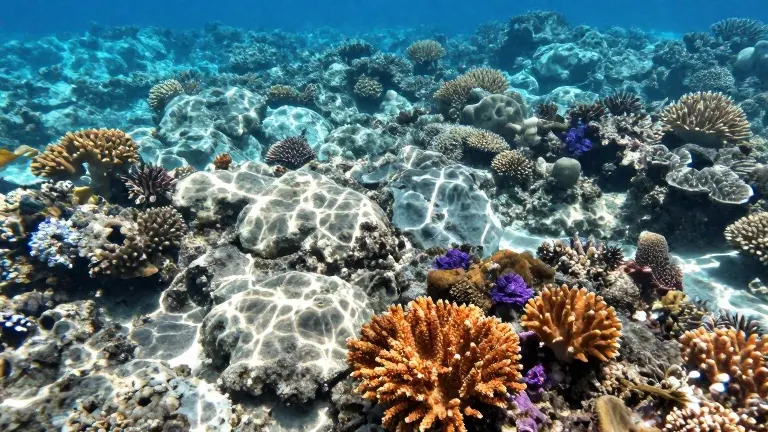
Marine ecosystems are already feeling the strain. Corals build the framework that supports vast numbers of other species. They provide food and livelihoods for hundreds of millions of people. However, prolonged marine heat waves cause corals to bleach, turning them white and often killing them.
Since the late 1990s, the world has seen four global bleaching events. Scientists say a fifth event is likely unfolding now due to a strong El Niño raising water temperatures. A study published last month in the journal Nature found that 44% of coral species globally are at risk of extinction. This assessment was made before the 2023 to 2025 bleaching event concluded.
David Obura, director of CORDIO East Africa, notes that time is critical for coral survival. "Every ten years, every five years counts," Obura says. The Intergovernmental Panel on Climate Change found that beyond 2 degrees Celsius of warming, 99% of corals would be lost. Obura anticipates that at 2 degrees, most corals will not survive in functional ways to build reef ecosystems.
Human bodies also face physiological limits as temperatures rise. Heat waves are already causing heavy death tolls. In Europe, an estimated 50,000 people died of heat-related causes this past summer. Lenton compares the human body to a tipping point, where physiology reaches a limit and the worst outcome is death.
Warmer air also holds more water vapor, leading to heavier downpours. Air can hold 7% more water vapor for every degree of warming. Rainstorms are already getting more intense in most of the U.S. Higher warming levels could also trigger the collapse of Antarctic glaciers, raising global sea levels.
Conservation groups and coastal communities are working to make reefs more resilient. Strategies include restoring corals, reducing water pollution, and breeding heat-tolerant species. Obura notes that many people live in degraded ecosystems and must find ways to make them function again.
At the COP31 summit, major new commitments to cut emissions are not expected. Discussions are focusing on a new goal for electrification. This involves running more cars and homes on electricity generated by cleaner sources like solar and wind to reduce overall emissions.