Turkmenistan Pipeline Reaches Herat, Pakistan Vows Commitment
The TAPI project, long stalled, now aims for completion by year's end as regional energy crises shift diplomatic priorities.
By Yasmin Farouk ·
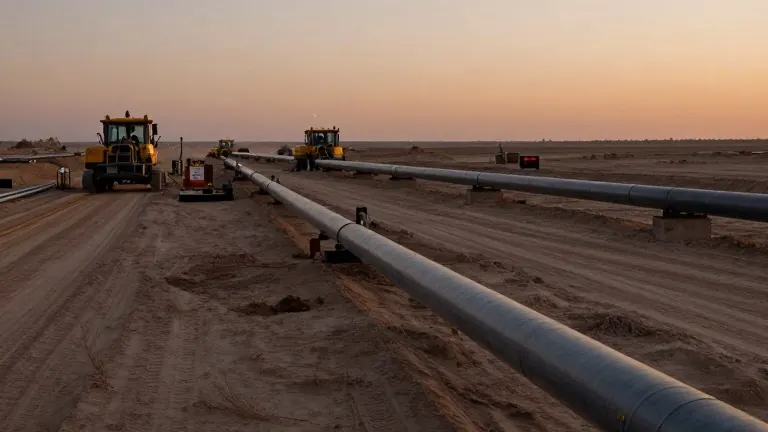
Satellite imagery captured on November 7 confirms the Turkmenistan-Afghanistan-Pakistan-India gas pipeline has extended to a construction zone 22 kilometers west of Herat. Officials in Ashgabat announced this progress at an energy forum in late October, stating the line would be commissioned by the end of 2026. This development marks a major milestone for a project that had faced years of delays and questions about its survival.
The 1,800-kilometer pipeline is designed to connect Turkmenistan’s Galkynysh gas fields with consumers in Afghanistan, Pakistan, and India. First conceived in the 1990s, the project suffered from regional instability and waning interest from partners. By 2024, India had appeared to distance itself, and Pakistan’s engagement had cooled. The estimated cost, which can reach $10 billion, further raised doubts about the venture's viability. Turkmenistan has spent a reported $600 million specifically on the section reaching Herat.
John M. Roberts, a senior fellow at the Atlantic Council, noted that Turkmenistan views the project as a source of national pride. He suggested the country became so fixated on TAPI that it pursued construction aggressively to demonstrate the project was still active. Roberts argued that this dedication may now be paying off due to the energy crisis triggered by the Iran war. The closure of the Strait of Hormuz by Tehran has restricted Persian Gulf supplies, prompting Pakistan to re-engage with the pipeline.
Faryal Leghari, Pakistan’s ambassador to Turkmenistan, stated at the same Ashgabat conference that Islamabad is now committed to advancing the line. Roberts believes Turkmenistan’s investment in the initial stretch could lead to partnerships for the route south to Kandahar and Pakistan. He highlighted that Chinese financial support might be necessary, as the project is too large for Ashgabat to handle alone. Afghanistan has also proposed Russian investment for the onward route.
Construction in Afghanistan has been exclusively managed by Turkmen engineers and equipment. Afghan involvement is limited to armed security. One local source described large Turkmen vehicles transporting workers daily across the Torghundi border crossing. Residents of Herat, facing recent gas price spikes and electricity shortages, expressed hope for the new supply. The pipeline, which is 1.42 meters wide, is expected to bring much-needed resources to the region.
Afghanistan is scheduled to receive only 5 percent of the gas flow, with Pakistan and India splitting the remaining 95 percent. While the pipeline offers transit fees to Kabul if extended, local residents are focused on immediate benefits. Abdul Saboor Rahmani, a software engineer in Herat, called for transparent access to the gas and prices closer to global market rates rather than current high costs.