G20 diplomats convene in Atlanta amid diplomatic tensions and war
Secretary of State Marco Rubio chairs the gathering as Russia and China prepare to join the summit ahead of a December leaders' meeting in Florida.
By Natalie Cooper ·
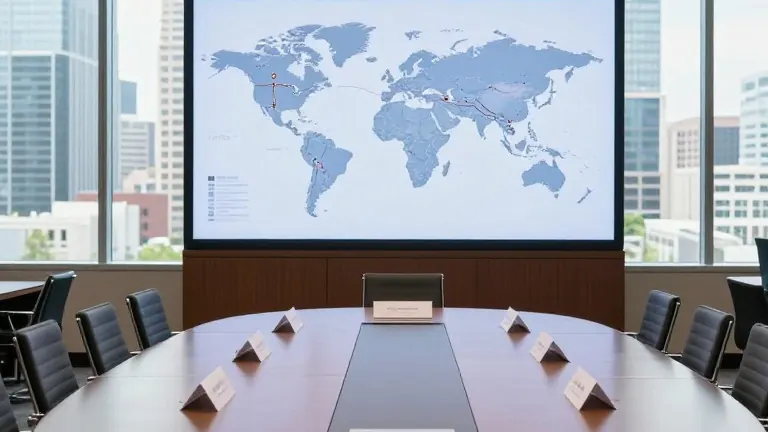
Senior diplomats from the Group of 20 largest world economies are meeting in Atlanta this week to address deep divisions over ongoing wars and global trade crises. The gathering is being chaired by U.S. Secretary of State Marco Rubio and will take place Friday and Saturday. The meeting serves as a precursor to a G20 leaders summit that President Donald Trump will host at his golf club in Miami in December.
The group faces substantial disagreements on several major fronts. These include the conflict between Russia and Ukraine, the war involving the United States, Israel, and Iran, and the impact of U.S. tariffs. Tensions over Chinese activities in the South China Sea also remain a point of contention. These disputes have contributed to rising global fuel costs and created uncertainty in international trade.
U.S. officials have identified freedom of navigation as their primary objective for the sessions. They intend to discuss specific chokepoints including the Strait of Hormuz, the Red Sea, the Black Sea, and the South China Sea. The agenda will cover the implications of the Iran conflict, the Russia-Ukraine war, and the dynamic between China and its smaller neighbors.
Russian Foreign Minister Sergey Lavrov will represent his country at the Atlanta meeting. His presence has drawn attention from Western allies who are uneasy about engaging with Moscow during its intensified attacks on Ukraine. China will be represented by a deputy foreign minister. Most other G20 nations have sent their top diplomatic representatives to the event.
Russia's foreign ministry stated that its delegation secured visas at the last minute. Spokeswoman Maria Zakharova said these complications gave the impression that not everyone in Washington was pleased with Lavrov's attendance. She noted that Lavrov plans to use the platform to advocate for the swift reform of global economic institutions and to promote a multipolar world.
Ian Kelly, a former U.S. ambassador to Georgia who now teaches at Northwestern University, described the invitation as politically boneheaded. Kelly noted that the decision could create domestic political issues for Trump just days before the midterm elections. He said many Republican lawmakers are displeased with the conciliatory approach toward Putin, while Democrats may use the invitation to criticize the GOP.
Kelly added that Lavrov's attendance will likely complicate efforts to produce a unified statement on the Russia-Ukraine war. He stated that the Russian presence will diminish the message that Western members wish to convey. Ukraine, which is not a G20 member but was invited to previous meetings, was not included this year due to a conscious decision to limit participation to formal members.
South Africa is also missing from the invitee list. The country chaired the G20 last year and is currently involved in several disputes with the Trump administration. Top U.S. officials, including Trump and Rubio, previously avoided meetings hosted by South Africa. The State Department said Rubio views the event as a way to advance practical cooperation on shared economic and security challenges.
Elaine Dezenski, head of the Center on Economic and Financial Power at the Foundation for Defense of Democracies, characterized the Atlanta meeting as a test rather than a traditional conference. She stated that the event takes place in an environment of widening disagreement over the global economic order. Dezenski said the key question is whether the U.S. can build cooperation with partners when full consensus appears out of reach.
The State Department pointed to threats to energy and food security and the preservation of critical mineral supply chains as areas of focus. Dezenski noted that the administration has shown willingness to work outside the G20 framework to build coalitions. She said the meeting offers a chance to assess if shared economic security concerns can lead to meaningful cooperation without requiring full group consensus.
Source: Stamford Advocate