Starship 15 launch tests first full recovery of both rocket stages
SpaceX will attempt to catch the Super Heavy booster and Starship vehicle at the pad, a move that could transform the economics of orbital launch.
By Ryan Carter ·
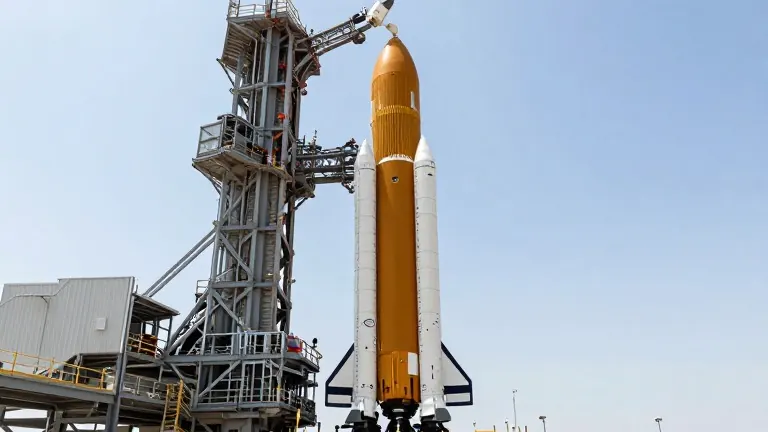
The central question for Friday’s Starship Flight 15 is not what reaches space, but what comes back. SpaceX has announced a plan to recover both the Super Heavy booster and the Starship spacecraft at the launch pad in Starbase, Texas. This represents a departure from previous missions where components were jettisoned into the ocean, rendering them unusable for subsequent flights.
The launch window opened at 4:47 p.m. CST on Friday. The company aims to demonstrate that the vehicle stack can be reused, a capability that remains standard practice in other sectors of transportation but is absent in current NASA rocket operations. Reusability is expected to lower the per-flight cost of accessing orbit, potentially altering the financial model for commercial space missions.
The recovery sequence is split into two distinct operations. Approximately six minutes after liftoff, SpaceX will attempt to catch the Super Heavy booster at the launch site. The upper stage, the Starship vehicle, follows a longer trajectory. It will enter orbit and remain there for nearly 24 hours before returning to Earth for a second attempt at pad recovery.
During its orbital phase, the Starship vehicle is scheduled to deploy 26 Starlink V3 satellites. These units will join SpaceX’s existing constellation, increasing the capacity of its global communications network. The deployment occurs before the vehicle begins its descent back to South Texas for the final catch.
Elon Musk, SpaceX’s CEO, has framed the reusability goal using a common comparison. He told an audience at the X Takeover 2025 event that current rocketry resembles driving a car and then throwing it away after every trip. He stated, "If every time you drove somewhere you had to throw away the car, you'd be 'Wow, that's a crazy car where you have to throw away after every time you drive it.' But that's how it works for rockets."
Visitors from North Carolina, Connecticut, and other parts of Texas gathered in Starbase to observe the event. Randall Folsom, a visitor from North Carolina, described the moment as the "holy grail of rocketry." He noted that watching a vehicle of that size and complexity launch and then be caught is a defining milestone for the industry.
The mission marks the culmination of nearly three years of testing from the South Texas facility. The outcome of Friday’s launch will determine if the dual-recovery protocol works as designed. Both stages are slated to land at the pad rather than splash down, setting the stage for immediate inspection and potential refurbishment.