Four carriers now control 80% of US domestic flights
Consolidation in the airline industry continues as smaller carriers merge or close, leaving travelers with fewer options and higher fares.
By Nathan Reed ·
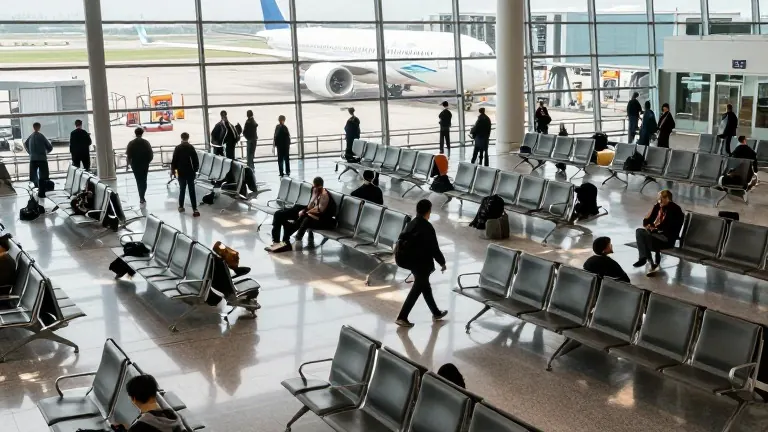
Four major US carriers, United, Delta, American, and Southwest, currently provide about 80% of all domestic seats, according to data from aviation analytics firm Cirium. This level of market control has grown as the industry consolidates over the past twenty-five years. These four airlines were formed from a dozen different carriers, including long-established brands such as TWA, Northwest, and US Air.
The number of flight options for travelers has shrunk recently. Discount carrier Spirit Airlines went out of business after last year’s holidays. Budget airline Allegiant completed its purchase of rival Sun Country in a merger that received little public attention. Aviation experts note that unprofitable US airlines rarely shut down entirely. Instead, they are usually acquired by larger competitors.
Smaller regional carriers are also merging. Alaska Air purchased Hawaiian Airlines and Virgin America in recent years. These acquisitions reduced the number of airlines operating between Hawaii and the mainland, as well as along the West Coast. Zach Griff, author of the airline newsletter “From the Tray Table,” said that reduced competition allows remaining companies to work less hard on price and product.
United Airlines CEO Scott Kirby confirmed earlier this month that his company has not given up hopes of buying American Airlines. Kirby told investors at a conference that the deal would require divestitures but could likely be approved. American Airlines CEO Robert Isom rejected the idea in April, calling a merger between the two giants “a nonstarter.” Isom told CNBC that such a deal would be anti-competitive and bad for customers.
JetBlue has faced financial struggles that raise questions about its future independence. The budget carrier maintains an alliance with United, allowing them to cross-book passengers and share frequent flier miles. Savanthi Syth, an airline analyst at Raymond James, said JetBlue’s heavy debt burden makes it a potential target if fuel prices cause further issues. She noted that even if JetBlue restructures and sheds debt, it could become a more attractive takeover candidate.
Frontier Airlines is another discount carrier dealing with financial troubles. Frontier previously tried to merge with Spirit in 2022, but that deal was blocked over antitrust concerns. The industry’s focus on profitability has led to higher prices for passengers. US airfares were up 22% in September compared to the same month last year, according to the Consumer Price Index.
A report by the Government Accountability Office concluded that passengers face higher fares and lower service quality on routes where mergers reduce the number of competitors. William McGee, a senior fellow at the American Economic Liberties Project, said airlines used to compete fiercely on fares in the 1980s and 1990s. He stated that the major carriers no longer compete with each other in the same way, focusing instead on higher-cost services for premium passengers.
Delta CEO Ed Bastian told investors in October that current price points are sustainable as long as travel demand remains strong. He attributed the fare increases to higher jet fuel prices following the war in Iran. Fuel is the second-largest cost for airlines, behind only labor. Executives expect fares to stay high even if fuel prices drop, provided the market continues to accept the higher rates.
More News · Charlotte news · Report a business · Got a Story?