Diplomatic Summit: Trump Returns for Briefing on Nuclear Talks
The president will address the press at noon following a four-day Asian trip that included a rare trilateral meeting with Xi and Putin, yielding few concrete policy shifts.
By Yasmin Farouk ·
President Trump is scheduled to hold a White House news conference today at 12 p.m. ET.
The briefing follows his return to Washington after a four-day trip to Asia. During the visit, he joined Chinese President Xi Jinping and Russian President Vladimir Putin for a rare three-way meeting.
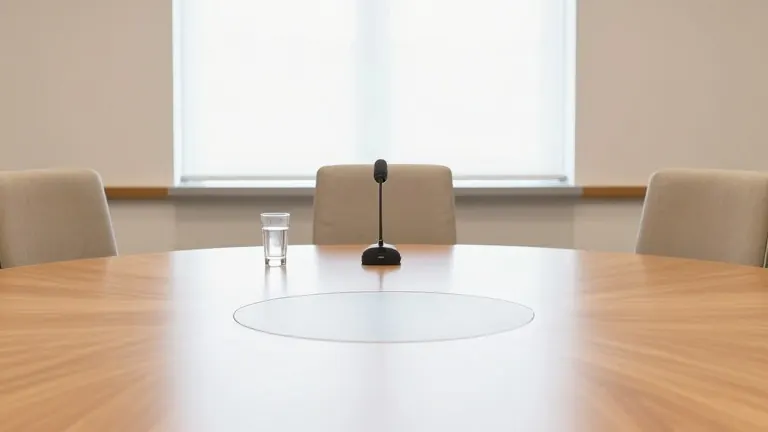
The three leaders, who command the world's largest nuclear arsenals, met at a lakeside resort in Shenzhen, China. They sat around a large round wooden table to discuss nuclear proliferation, Iran, and global relations. Trump stated that the group was making history and bore a responsibility to maintain open dialogue.
"Too often, past leaders avoided talking to nations with whom they had disagreements. And we feel the opposite," Trump said. "No problems were ever solved under the old school, refusing to talk about it. No peace was ever forged by declining opportunities for engagement and speech."
While the meetings were filled with displays of power, they produced few signs of major concessions from Xi or Putin. The visit did not appear to be primarily focused on locking down specific agreements, a common goal for such diplomatic tours. Instead, the events served as a choreographed display of standing for each leader.
For Xi, the gathering allowed him to showcase China's global leadership by convening the world's greatest nuclear powers. For Putin, it offered a chance to reestablish Russia as a geopolitical power equal to China and the United States. Trump used the trip to demonstrate his ongoing authority after a difficult midterm election result at home.
Suzanne Maloney, vice president and director of the foreign policy program at the Brookings Institution, described the trip as a way for Trump to seek validation of his standing as a historical figure. "He wanted the optics of this direct engagement with Presidents Xi and Putin as a sort of validation of his own standing," Maloney said. "I think the photo op provided that."
The lack of deliverables has raised questions about the effectiveness of Trump's personal approach to diplomacy. He has spent recent years moving away from traditional alliances in favor of direct deals with superpowers. However, Xi and Putin have their own strategic objectives that are unlikely to change based on personal rapport. Maloney noted that both leaders must calculate whether any agreements can survive future domestic scrutiny or a change in administration. "I think both Putin and Xi recognized that President Trump's time is beginning to wane," Maloney said, "that his command of U.S. politics is also beginning to wane, and they're going to be looking to who and what may be coming next."