Audit finds Hawaii Army deployment risks
Internal review cites infrastructure gaps and administrative confusion at the 25th Infantry Division’s home base.
By Ryan Carter ·
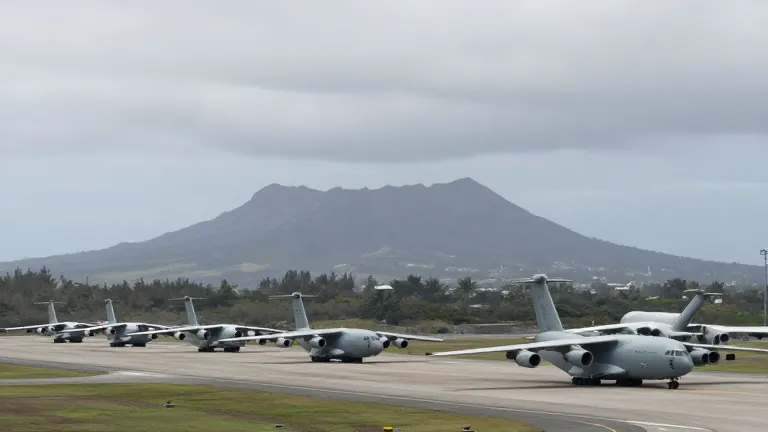
An internal Army audit completed in April found that forces stationed in Hawaii may struggle to deploy quickly in a potential conflict with China in the western Pacific, according to a report obtained via the Freedom of Information Act.
The Army Audit Agency identified unaddressed infrastructure issues and equipment readiness problems at the deployment support facilities. Auditors noted specific deficiencies including flooded maintenance bays and gaps in deployment support training. The report concluded that units might not be able to effectively deploy from Hawaii in a no-notice contingency or other real-world mission.
The islands host roughly 47,000 active-duty troops, including the 25th Infantry Division, US Army Pacific headquarters, and US Indo-Pacific Command. US planners view the location as a secure hub for moving troops and equipment toward the western Pacific, a region where Chinese missiles threaten bases closer to the Asia mainland.
The review was requested by a top official from the Army’s Pacific headquarters because leaders lacked confidence in the U.S. Army Garrison Hawaii’s ability to function as a power projection platform. A command spokesperson acknowledged to CNN that the audit revealed opportunities to strengthen unit movement support at the multifunctional deployment facility.
Michael Mazza, a defense strategy expert at the nonpartisan Institute for Indo-Pacific Security think tank, stated that the 25th Infantry Division is the most forward Army unit designed to deploy into the region. He argued that delays or breakdowns in Hawaii deployment processes would impact the Army’s ability to get into a fight in the western Pacific.
Army headquarters initially disagreed on which entity was responsible for devising and funding solutions to the deployment support shortcomings. The USARPAC spokesperson said the service has taken actions to strengthen deployment support and included action plans in the report for addressing the administrative issues.
The command stated that the Army continues to address infrastructure and equipment requirements at the facility through established prioritization, coordination, and resourcing processes. The service plans to treat training exercise missions as recurring opportunities to deploy forces and equipment and rehearse sustainment.
US military planners are shifting toward a more distributed footprint in the region to complicate Chinese targeting. This strategy responds to China’s investment in ballistic and hypersonic missiles and a larger seagoing navy, which supports an anti-access area denial strategy using anti-ship and anti-air missiles.
The US Air Force is rehabilitating smaller airbases, including the former World War II airfield on Tinian in the Marianas Islands. The Army is dispersing previously shipboard prepositioned equipment to strategically located land-based locations in the region to enable rapid deployment.
Mazza argued that Hawaii becomes more important once a conflict begins because of its relative safety. The report notes that US planners have historically relied on a limited number of large bases, including those in Hawaii, Guam, and Japan, to flow materiel and personnel into the Pacific theater.
More Politics · Charlotte news · Report a business · Got a Story?